Table of Contents
- Why $1,000 became the go-to number (and why it’s still useful)
- Reality check #1: inflation shrinks what $1,000 can do
- Reality check #2: today’s “normal emergencies” often start above $1,000
- So how much emergency fund do you actually need?
- A tiered plan that really works (without waiting years)
- How to build it faster (without making your life miserable)
- Where should you keep your emergency fund (so that it is available at that moment you need it)?
- Rules for using your emergency fund (so it doesn’t become a ‘miscellaneous fund’)
- Common mistakes that render a $1,000 fund feel useless
- Emergency fund checklist – a speedy monthly review
- Bottom line
- FAQ
$1,000 is a good starter buffer but 2026 is not 1996.
Inflation matters. On average, using CPI-U, prices were about 23% higher in 2024 compared with average prices in 2019. That means the same basket of groceries and services costs about a quarter more than it did five years ago. ($1,000 doesn’t stretch as far as it did years ago).
Bluntly, many people have difficulty squeezing medical expenses, vehicle repairs, or lost wages into $1,000. 1 in 3 U.S. adults didn’t have emergency funds equal to their health insurance deductible, the Kaiser Family Foundation reported. Nearly 1/3 of U.S. adults couldn’t pay an unexpected bill of $400, the Federal Reserve reported.
What’s a more dependable approach? Save (1) a starter buffer, (2) a couple of months of essentials, and then build up to 3–6 months of essentials (or 6+ if your income is volatile).
Don’t keep savings for non-emergency expenses. Choose boring, liquid savings: a distinct bank account that’s protected by deposit insurance, can be accessed in a few days if needed, and has clear rules when it can be touched.
To be clear, this article is offered for educational purposes only. Please seek qualified, personalized financial advice if you’re facing job loss, a debt situation, or an acute medical situation. The smarter question isn’t “Is $1,000 good or bad?” It’s “What level of emergency can $1,000 realistically handle, and what’s my next target?”

Photo by www.kaboompics.com on Pexels (source, Pexels License)
Why $1,000 became the go-to number (and why it’s still useful)
A $1,000 “starter” emergency fund works because it’s achievable. It can cover a minor car issue, a copay, a utility deposit, a last-minute flight, or a bite-sized chunk of a bigger bill. Many mainstream financial educators still frame $1,000 as a starting benchmark—then recommend building toward a larger fund that covers months of essential expenses. (fidelity.com)
So no: $1,000 isn’t “pointless.” It’s a first layer of protection. The problem is treating it like the finish line.
Reality check #1: inflation shrinks what $1,000 can do
Even if your personal expenses haven’t changed much, the buying power of $1,000 has. Using the CPI-U annual averages from the Bureau of Labor Statistics (BLS), the index rose from 255.657 in 2019 to 313.689 in 2024—about a 23% increase in overall price levels. (bls.gov)
Put plainly: $1,000 in 2019 is roughly equivalent to about $1,227 in 2024 dollars. Or flipped around, $1,000 in 2024 buys about what $815 did in 2019. (bls.gov)
Reality check #2: today’s “normal emergencies” often start above $1,000
The bigger issue isn’t just inflation. It’s that so many common surprise expenses are now closer to “medium emergencies” than “small emergencies.” Here’s a sampling of categories where $1,000 gets vanishingly small fast.
Health insurance: a $1,000 fund may not even reach your deductible

Photo by Leeloo The First on Pexels (source, Pexels License)
For those with employer-sponsored insurance, deductibles can be a big part of the reason a “simple” medical situation becomes a cash-flow crisis. KFF reports that 87% of covered workers are in a plan with a general annual deductible, and among workers with a deductible, the average deductible for single coverage was $1,787 in 2024. (kff.org) That means you won’t always write a $1,787 check tomorrow. But it does mean that $1,000 might not cover the first big bill before insurance really kicks in—especially early in the year, or before you have met the deductible.
Cars: repairs don’t schedule themselves
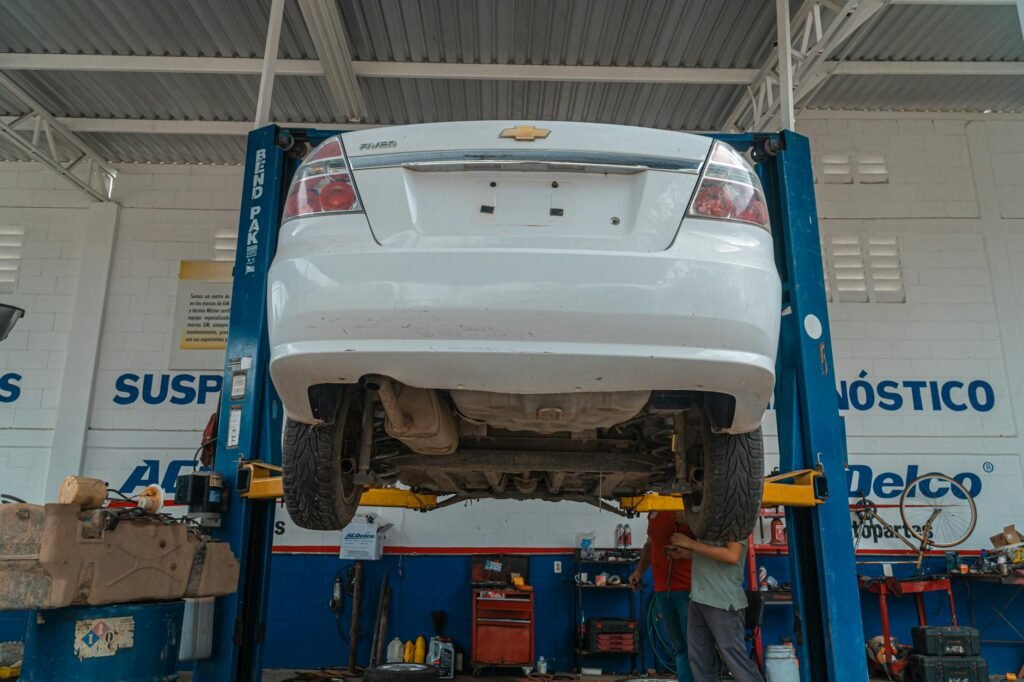
Photo by Jose Ricardo Barraza Morachis on Pexels (source, Pexels License)
If you drive, you face serious repair risk—be it a tire, brake, or battery replacement, a tow, or something else. AAA’s “Your Driving Costs” fact sheet estimates maintenance, repair, and tires to be 10.13 cents per mile (averaged over five years and 75,000 miles for a new vehicle). That adds up to about $1,520 per year in that category at 15,000 miles per year—before getting into major repairs. (newsroom.aaa.com) Even if your own vehicle expenses are lower (or you drive less), one surprise can wipe out the $1,000—and then you need to keep earning to pay the car repair.
Emergency income gap: the emergency that most of us aren’t sufficiently prepared for
Emergency funds aren’t just for surprise bills; they’re also for surprise shortages of paychecks. The Federal Reserve’s Survey of Household Economics and Decisionmaking (SHED) uses a “rainy day” measure: whether people have money set aside to cover three months’ worth of expenses. In the 2024 survey year, 55% of adults said they had put aside three months of expenses in an emergency savings/rainy-day fund. (federalreserve.gov)
That same report also has a different angle: when asked what the largest amount they could handle right at this moment was for an emergency expense using just savings, 48% of adults said $2,000 or more, and 10% said $1,000-$1,999. (federalreserve.gov)
The “$400 question” shows just how small of an emergency we prepare for
You’ve probably seen headlines about folks being able to cover a $400 emergency or not. In 2024, 63% adults said they would pay a hypothetical $400 emergency expense with cash or its equivalent right at this moment, and 13% said they would not be able to pay that right now. (federalreserve.gov)
That’s useful as a long-time benchmark, but frankly not a useful amount for an emergency fund. Even the Federal Reserve Bank of Minneapolis has noted the level of attention that the $400 emergency expense number gets for its directness in framing financial fragility. (minneapolisfed.org)
| Expense type | Why $1,000 can fall short | What to do next |
|---|---|---|
| Medical care with a deductible plan | Average deductible for single coverage was $1,787 in 2024 (among covered workers with a deductible). (kff.org) | Build a “deductible buffer” in addition to your basic emergency fund target. |
| Vehicle maintenance/repair/tire costs over a year | AAA’s 2024 estimate for maintenance/repair/tires is 10.13¢/mile—about $1,520/year at 15,000 miles. (newsroom.aaa.com) | Use sinking funds for predictable maintenance AND keep an emergency layer for surprises. |
| Short-term income disruption | A full emergency fund is meant to cover essential bills for months, not days (55% reported having 3 months set aside). (federalreserve.gov) | Shift from a flat $1,000 target to “months of essential expenses.” |
So how much emergency fund do you actually need?
The best emergency fund target is personal. It depends on (1) how expensive your life is to keep running at “minimum,” and (2) how likely you are to face an income disruption or big surprise bill. A common guideline you’ll see from major consumer-facing sources is to work toward 3 to 6 months of essential expenses. (fidelity.com)
Step 1: Calculate your “essential monthly expenses” number
- List your must-pay bills: housing (rent/mortgage), utilities, minimum debt payments, insurance premiums, childcare you can’t pause, and transportation required to work.
- Add your baseline groceries and prescriptions to the number (this isn’t restaurant spending!).
- Add any recurring costs that would absolutely impact your livelihood if you weren’t able to stay on top of them. (“Basic internet” if required for your job, but not every subscription streaming service).
- Use the last 2-3 months of bank/credit card statements to sanity-check it, and round up a little bit.
Step two: Choose a coverage target
3 months? 6 months? More?
| Your situation | Suggested target | Why |
|---|---|---|
| 2 Incomes, strong job security, 1/3rd costs | 3 months of essential expenses | You don’t have many months to cover in case of layoff, but you’re in a good spot to respond quickly if bills arrive. |
| 1 Income =OR= chance of being laid off =OR= costs are high | 4-6 months of essential expenses | You need a bit of cushion if you’re laid off, sick or hit with an unexpected expense. |
| Self-employed, commissioned, gig work, seasonal work | 6-12 months of essential expenses | Your work and wealth gets fat, then thin; cash smoothes out your tides. |
| You’re supporting someone else or few options if you don’t work | Leaning toward half a year or more | High-stakes work; low-stakes money. You can’t afford to drum roll. It’s all your cash. You don’t have any backup plans. |
Step 3: Add a “deductibles + get-me-back-to-work” buffer
Months-of-expenses is the heart. But many people like to add a tiny buffer for high-certainty, high-impact immediate cash needs—like insurance deductibles or things that keep you earning (car repair, urgent travel, a laptop if you work remotely).
- Health plan deductible (or the amount you realistically pay before insurance meaningfully helps). (kff.org)
- Auto insurance deductible (check your policy declarations page).
- Homeowners/renters insurance deductible (check your policy).
- A “transportation continuity” number: enough to pay for a repair, a rental for a couple days, or alternative transport so you can work.
A tiered plan that really works (without waiting years)
If you’re starting at $0, “save 6 months of expenses” can sound like total a lie. That’s why you chip away at it tier by tier: each new layer shrinks the odds that you’ll be borrowing at the worst possible moment.

Photo by www.kaboompics.com on Pexels (source, Pexels License)
Tier 1: Starter buffer ($500-$1,000)
- Goal: keep small surprises (tow, urgent prescription, minor repair) from ruining your month and sending you into credit card debt
- Where it goes: a savings account, not your everyday checking
- Rule: not a planned expense, only a surprise. No holiday gifts or routine car maintenance.
Tier 2: One month of essential expenses
This layer gives you time. At this point you’ve turned an “oh no” moment into a “we have 30 days to make good decisions” moment: adjust spend, negotiate, take on extra hours, look for work without immediate panic.
Tier 3: Full emergency fund (3–6+ months of essential expenses)
This is the layer meant to grapple with the “big stuff”: job loss, medical events, family emergencies, major repairs, without sending you sliding into high interest debt. Many of the mainstream guides for building an emergency fund advise going up to this level after you’ve built a starter buffer. (fidelity.com)
How to build it faster (without making your life miserable)
- Automate first: set up a transfer right after payday (even if it’s just $25 or $50) and treat it like a bill that you have to pay or you won’t get groceries.
- Use “found money” (tax refund, a gift, work bonus, cashback) to send a percentage to this fund first before you spend, or the fund will never grow. The CFPB specifically recommends taking advantage of one-time opportunities to build emergency savings more quickly (consumerfinance.gov).
- Lower your required monthly essentials: negotiate your insurance, look again at that phone plan, pull back on a few subscriptions that aren’t vital and the minimum amount on high-interest debt. The individual items can be much more clear-cut and negotiable when you find yourself looking at a smaller essential number.
- Make a few sinking fund accounts to put aside for predictable costs like car maintenance or annual premiums that can churn through your emergency fund like a bad car wreck.
- Make the first rebuild automatic: if you had to use your emergency fund, do you keep your normal transfer going until you measure back up to your previous tier?
Where should you keep your emergency fund (so that it is available at that moment you need it)?
Your emergency money has only one job: be there when life happens, and that means that safety and availability come before seeking the highest possible yield. Common places to keep emergency savings (pros and cons)
| Option | Pros | Cons / watch-outs |
|---|---|---|
| High-yield savings account (HYSA) or savings account at an FDIC/NCUA-insured institution | Liquid, simple, typically insured up to limits, easy to separate from spending | Transfers can take 1–3 business days depending on the bank |
| Money market deposit account (bank) or credit union money market account | Often easy access, sometimes check-writing | Rates can change; confirm access rules |
| Checking account | Instant access | Too easy to spend; usually earns less interest |
| Treasury bills / cash management products | Can be relatively low risk | Access may not be instant; selling takes at least a few days; not for “need cash today” emergencies |
| Invested in stocks/crypto | Potential for higher returns | Not an emergency fund: value can drop right when you need it |
Rules for using your emergency fund (so it doesn’t become a ‘miscellaneous fund’)
Use it for urgent, necessary, unplanned expenses—or to keep the lights on during an income gap.
If it’s predictable, plan for it separately (sinking funds). Examples: routine car maintenance, annual membership renewals, holiday spending.
- Trigger your Emergency Fund: “I can use this money when (a) my safety/health is involved, (b) when I need to repair or replace something to keep earning my paychecks, or (c) when I simply can’t delay it without incurring even more costs.”
- Breathlessly await after you use it: Pause all those extra investing dollars for a bit (if needed), and rebuild it to the full last tier before darting forward of it again.
Common mistakes that render a $1,000 fund feel useless
Mistake: you treat that $1,000 nest-egg as final. Fix: you fortify that $1,000 as Tier 1 and eventually amass a month and then 3-6 months.
Mistake: you intermingle your emergency savings with your daily spending. Fix: seperate account + nickname it (thinking “Do Not Touch”).
Mistake: you ignore all of your deductibles. Fix: check on your deductibles for your health coverage, auto, and renters/home, and make that part of your target. (kff.org)
Mistake: you dip into your emergency fund for predictable expenses. Fix: have sinking funds so the emergency fund stays intact.
Mistake: you invest emergency money for firing up intentionally. Fix: Keep the pot liquid, and only invest what you can afford to leave {as-is} for an extended timeframe.
Emergency fund checklist – a speedy monthly review
- Can you verify your current tier easily?: 1,000 big ones? 1 month essential bills? 3-6 months?
- Some essential expense number must have changed since last month: housing, kiddo, insurance or debt minimums?
- Have you checked on all your deductibles? Once a year (or for the brilliant reader: every time you swirl into a different health plan): health! … and auto (and renters or home). (kff.org)
- What’s your access like: to move this coin to your checking account, instantly, if you need it?
- If you did use the fund this month, trigger the rebuild automatically so you’re right back up to speed next payday.
Bottom line
A $1,000 emergency fund can help for sure—especially if you’re starting from nothing. But it’s usually not enough to cover deductibles, meaningful car repairs, or an income shock. In a more costly world, the more straightforward grade up from “flat number” to personalized plan is starter buffer, then organics month, then emergency fund measured not in dollars but months of essentials.
FAQ
Is $1,000 still a good emergency fund goal in 2026?
It’s a good starter goal, Tier 1. It can help blunt small surprises so you don’t go to debt. But for many households, it’s not a full emergency fund because common costs (like deductibles) could exceed it. kff.org
Should I save 3 months or 6 months of expenses?
It’s a risk question. If your job feels stable and your fixed costs are low, lucky you—you may be good with 3 months. If your income is variable, you support others, or your monthly essentials are relatively high, lean toward 6+ months. Many consumer-facing guidelines seem to land at 3–6 months of essential expenses—a fine target. consumerfinance.gov
What if I have debt, should I still build an emergency fund?
Many people do both: emergency buffer first (so you don’t add more debt during surprise), then paying down high-interest debt, but continuing to build toward a larger emergency fund. Right balance depends, of course, on interest rates, position stability as well as stress level.
What qualifies as a real emergency?
Good rule is urgent + necessary + unplanned (or income interruption). Examples: Car repairs to keep getting to work, surprise medical billing, emergency travel, paying essential bills during a job layoff. Regularly planned expenses (car tune-ups, annual bills, holiday) should be sinking fund.
Where should I keep emergency savings so it’s safe but accessible?
Most folks wallet savings in insured savings account (yet another hyphenated acronym, HYSA) or similar ice cream truck (ice cream truck be our colloquialism for cash accounts) that’s segregated from daily spending. The point is easy access but not to try to make max return you can.