Table of Contents
“Cheap” becomes “expensive” when you ignore the full lifetime cost: maintenance, replacements, foreign transaction fees, and your time. Your brain will version “save $50 today” over “avoid $500 later.” (en.wikipedia.org) Use a Total Cost of Ownership (TCO) check: upfront price + operating costs + maintenance + risk + exit costs. (techtarget.com) If you only change one habit: always price the second order (repairs/replacement/time) before you pay for the first.

Most “cheap decisions” don’t fail because the price is low. They fail because the decision was made using the wrong math. Sticker price is easy and obvious; the real costs tend to show up later as repairs + replacements + wasted time + payment of fees + stress.
It’s not about “never buy the budget plan” – it’s learning when “cheap” is a smart trade-off – and when it lures you into false economy that it quietly creates an expensive problem.
What’s really happening: “false economy” + human psychology
1) False economy: the savings are real – but temporary
A “false economy” is where something saves money at the start, yet ends up costing more in the long run. A common example are making the cheapest purchase and later pay for it by repairing it, replacement, or other damage. (en.wikipedia.org) It’s also the idea behind the phrase “penny-wise and pound-foolish”: being careful about small costs while accidentally creating bigger ones. (merriam-webster.com)
2) Present bias: the urge to relieve today’s pain
Present bias is the tendency to overvalue immediate benefits and undervalue future costs. In money terms, that often looks like choosing a cheaper option now to reduce immediate spending, even if it increases your long-run cost. (en.wikipedia.org)
3) TCO thinking: the antidote to “sticker price” decisions
Total Cost of Ownership (TCO) is a way to measure the full cost of buying and using something over its useful life—not just the upfront price. (techtarget.com) You can use TCO for almost anything: a car, a laptop, a contractor, a “cheap” loan, or a DIY repair. If the decision will affect your budget for months or years, it has a TCO.
Where cheap decisions commonly blow up in our face (and examples of how)
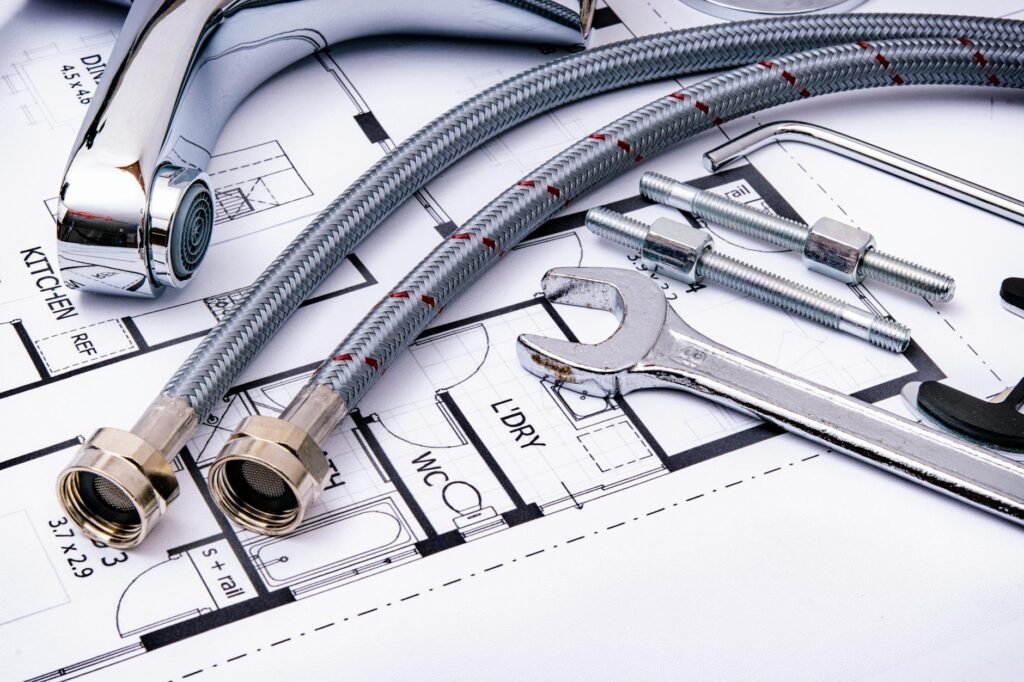
Home moisture is a small problem that can become expensive: often, the cause is careless decisions, years prior (or weak skills). Examples of this are too many to type on a Friday morning, but the ones that come to mind readily include roofs that weren’t looked to, water running in a basement cracks, causing walls to buckle underground, perylene networks that make a cellar bear a product of erratic HVAC care, clangy drawers, and faulty merchandise bought only last week.
But we can fix it, people! Look out for the musty smell and moisture – when it’s there, it’s everywhere!
A common “cheap” decision is to wait on a minor leak, damp drywall, or musty smell because the repair feels inconvenient or pricey. The hidden cost is that moisture can be an enabler of mold and other damage—which means the ultimate repair could be much more inconvenient and expensive than that original repair.
The EPA offers commonsense advice—control the moisture and repair leaks quickly; they also note that wet/damp materials can dry within about 24–48 hours after a leak or spill and mold typically doesn’t grow. (epa.gov)
Example 2: “Cheap financing” can become costly debt
Installment plans and short-term loans can “feel” cheaper, since the smaller payment isn’t as high dollar-wise as the total price. The real expense is shown if the payments cross over, if late charges hit, or you find that “short term” loan becoming a long-term habit.
The CFPB warns of dangers in the “buy now, pay later” marketplace (fee risks, and consumer harm risks), and risks in payday and deposit advance loans that can ensnare consumers in a “debt cycle.” (consumerfinance.gov)
Example 3: “Cheap product” can cause warranty headaches (not just cost)
Warranty coverage, parts availability, service policies…not to mention service costs and downtime means that two products that cost the same amount overall may have no commonality at the cash register. If your cheap item gives up the ghost early and you can’t easily get it repaired, you’ve been forced into a re-buy “deal.”
If you’re comparison shopping take five minutes to check out the warranty summary and the return policy, (the reviews are likely to be five minutes spent well). The Magnuson-Moss Act and federal warranty law affect what sellers can and can’t do in writing warranties for consumer products. (ftc.gov)
A simple framework: the 5-part TCO check (use it in 10 minutes)
- Upfront cost: Purchase price + delivery + setup + required accessories.
- Operating cost: Energy/fuel, subscriptions, consumables, and routine use costs. (For appliances, look for labels that help you compare operating cost, such as ENERGY STAR guidance from the U.S. Department of Energy.) (energy.gov)
- Maintenance & repair: Expected maintenance, replacement parts, service labor, and the time you’ll spend dealing with it.
- Risk cost: What happens if it fails at the worst time? Add a “risk premium” if failure would cause lost work, safety issues, or emergency pricing.
- Exit cost: Disposal, cancellation fees, resale value, or the cost to undo the choice (return shipping, restocking, uninstalling).

How to tell when “cheap” is totally fine (and when it’s dangerous)
- Cheap is fine when: failure is low-stakes, replacement is easy, and you won’t lose time/money if it breaks.
- Cheap is fine when: you’re testing a new habit or hobby and you’re not sure you’ll stick with it (you can “upgrade later”).
- Cheap is risky when: failure can cause secondary damage (leaks, electrical issues, data loss, safety equipment).
- Cheap is risky when: the purchase locks you in (subscriptions, long contracts, proprietary consumables/parts). Cheap is risky if: the true cost is hidden in usage costs (fuel, energy consumption, fees for use, repairs, etc.).
Common decision errors that make cheap choices backfire: We compare price, not price per year (or per use). We fail to consider the cost of our time spent making calls, returning items, troubleshooting issues, doing rework, and experiencing delayed projects. We rely on “I’ll be careful” replacing product quality (it won’t, and certainly, won’t on wear items). We skip the boring documents guaranteeing warranty, stating exclusions and conditions for returning an item or canceling a service and the terms and fees. We can’t budget for a small “sinking fund” to take care of maintenance and end up forced into high-cost credit when something breaks.
A checklist for decisions that you can save and reuse: Work through this before purchasing!
- What’s the Job? What does this absolutely need to solve (or do).
- What’s the Worst That Can Happen? If this thing dies, what happens then (i.e. cost of repair, money, time lost, safety considerations, peace of mind, etc?).
- Compare Three Options: Look at a low-end, mid-tier, and buy-it-for-good; consider which one to buy on then compare to these three (even if you won’t choose the most expensive option!).
- Do a 5-part total cost of ownership (TCO) check, and make sure to write down your line of thinking so you can understand your thought process later on that led you there.
- Check on warranty and return terms, parts/service and availability.
- Decide on your upgrade path: If you buy a cheap option now, what’ll its condition be that prompts you to upgrade sometime (not the vague “one day”).
- Run a 30-day Check-up on Your Purchase: Did it work? If so, great; if not make sure to share your feedback so you avoid paying twice for a mistake.