

Photo by Towfiqu barbhuiya on Pexels
By using a NO SPEND CHALLENGE as if it was a lab experiment instead of a character test, you get to assess your behaviour on an ongoing basis. You don’t want to be “really good” with your money for a week! You are wanting to identify yourself exactly at the moment you buy: the boredom purchase, convenience purchase, it was $12 habit, you forgot about your subscription and how the stress morphs into delivery fees. Ultimately, if done correctly, the NO SPEND CHALLENGE is not just about saving you money, but also exposing you (the person) to the exact same situations, app(s) or routine(s) that cause you to lose your cash flow every single month.
TL;DR
- Pick a 7- or 14-day window and define your “allowed” essentials before you start (so you don’t argue with yourself later).
- Track every urge to spend, not just what you actually buy — urges reveal triggers (stress, boredom, social scrolling).
- Add friction: remove saved cards, mute retailer emails, and plan food so “no spend” doesn’t turn into “hangry spend.”
- Do a mid-challenge check-in to spot patterns early and adjust rules without quitting.
- End with a “money habit autopsy”: turn each trigger into a replacement action and one permanent system change.
What a no-spend challenge is (and isn’t)
A no-spend challenge is a short, pre-planned period where you don’t buy anything outside a defined set of essentials. Think of it as a temporary spending “pause” that makes your default behaviors loud enough to notice.
What it is: a controlled experiment that reveals your spending triggers, weak categories, and convenience leaks.
What it isn’t: a long-term lifestyle, a punishment, or a reason to skip bills, medication, childcare needs, or minimum debt payments.
Why it exposes your worst money habits (fast)
Many money habits aren’t “decisions” you carefully make — they’re automatic responses to cues: a notification, a stressful day, an empty fridge, a social plan, a late-night scroll. In psychology terms, habits are repetitive behaviors often triggered by internal or external signals and reinforced through reward learning. (nimh.nih.gov)
With a no-spend challenge, you take away the most simple “reward” (purchase), requiring you to recognize both the “cue” and what you do routinely afterwards. This is where the real worth is; not only do you stop purchasing things, but also determine when your purchase happens so you can create a more satisfying/new default.
- Convenience spending: delivery fees, rideshare “because it’s late,” last-minute lunch
- Boredom spending: browsing retailers, “just checking deals,” thrift runs that aren’t really thrifting
- Stress spending: small treats that stack up (coffee, snacks, quick dopamine buys)
- Social spending: saying yes by default without checking your plan
- Subscription creep: free trials, auto-renewals, “I’ll cancel later” services
- Food leaks: wasted groceries + takeout because there’s “nothing to eat”
Pick the right version: 7-day, 14-day, or “weekdays only”
The best no-spend challenge is the one you’ll finish. If you’ve never tracked spending before, start smaller. If your main issue is “weekday leaks” (coffee, lunch, quick stops), do weekdays only.
| Challenge type | Best for | Main risk | Make it easier |
|---|---|---|---|
| 7-day (full week) | First timers; quick diagnosis | You blame the week instead of the habit | Pick a “normal” week (not travel/holidays) and pre-plan food |
| 14-day | Deeper pattern spotting; subscription audit | Willpower fatigue if rules are vague | Build replacements (walk, library, meal prep) before day 1 |
| Weekdays only (Mon–Fri) | Coffee/lunch/errands spending | Weekend splurge rebound | Add one weekend “cap rule” (example: $0 on Saturday until 5pm) |
The rules: what counts as “spending”
Write your rules down before you start. If you negotiate with yourself in the moment, your brain will always have a persuasive argument. The cleanest approach is: fixed obligations are allowed, true essentials are allowed, and everything else is paused.
| Category | Allowed during challenge? | Notes to avoid loopholes |
|---|---|---|
| Rent/mortgage, utilities, insurance | Yes | Autopay or pay as usual — don’t create late fees to win a challenge |
| Groceries | Yes (limited) | Define a cap (example: $60/week) and a list (staples + planned meals) |
| Medication/medical needs | Yes | Health is not optional; track it but don’t restrict it |
| Gas/transit to work | Yes | Work-related only; bundle errands to reduce extra trips |
| Restaurants, coffee, delivery | No (paused) | If this is hard, allow 1 planned exception and write it down now |
| Shopping (clothes, home, Amazon/Target runs) | No (paused) | Add items to a “30-day list” instead of buying |
| Entertainment, apps, in-game purchases | No (paused) | Replace with free options (library, walking routes, friends at home) |
Pre-challenge setup (30–45 minutes)
Your setup matters more than your motivation. The point is to reduce decision-making and remove easy spending paths.
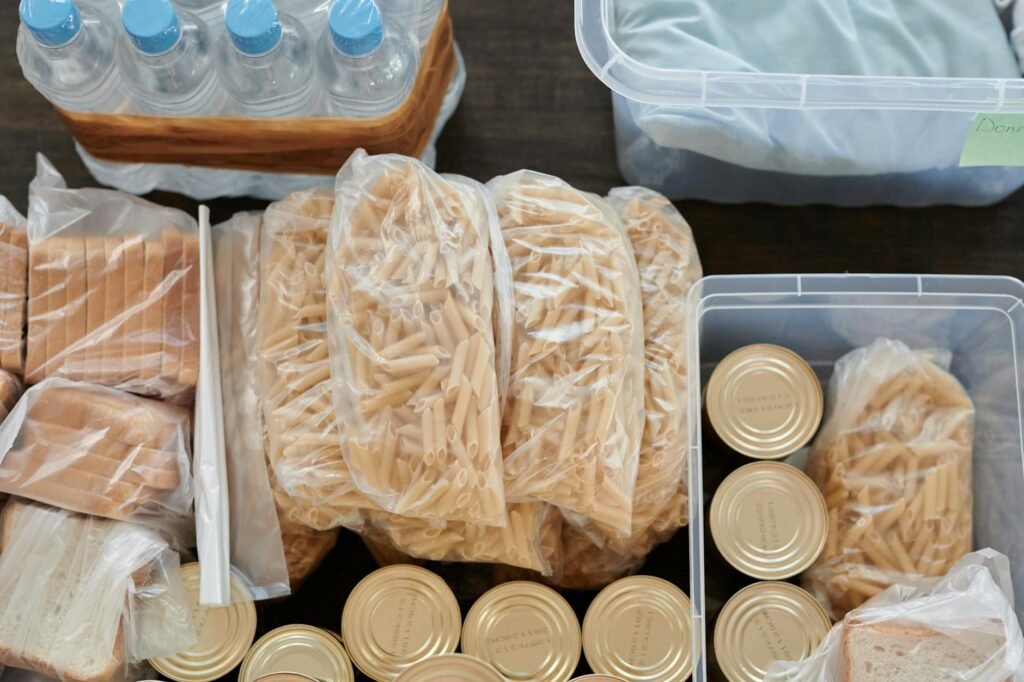
Photo by Julia M Cameron on Pexels
- Choose your dates and write your rules on one page (notes app is fine).
- List fixed bills that will hit during the challenge (so you don’t misread your bank balance). A simple budget worksheet can help you outline income and expenses. (bulkorder.ftc.gov)
- Pick 5–7 low-effort meals and buy only what you need (the goal is fewer “emergency” takeout moments).
- Add friction: remove saved payment methods from shopping apps, log out of retailer accounts, and delete food delivery apps for the challenge window.
- Mute marketing: unsubscribe from promo emails/texts, mute push notifications, and hide shopping apps from your home screen.
- Create your “replacement list”: 10 free or already-paid activities you can do instead of spending (walk, library, gym you already pay for, calling a friend, meal prep, declutter).
- Set up tracking: one note titled ‘No-Spend Log’ with three columns: Trigger • What I wanted to buy • What I did instead.
Your daily 10-minute routine (this is where the habits show up)

Photo by Annushka Ahuja on Pexels
The most useful thing you can track isn’t spending — it’s the urge to spend. If you only track purchases, you miss the pattern: what time of day you get tempted, which emotions show up, and which situations create the craving.
- Morning (1 minute): Read your rules. Decide today’s food plan and transportation plan.
- During the day (30 seconds each time): When you feel the urge to buy, log the trigger (example: ‘3:15pm, tired, saw ad, wanted iced coffee’).
- Add a pause: wait 10 minutes before acting on any non-essential urge. (Set a timer; don’t ‘mentally’ time it.)
- Do a replacement action: drink water, make tea, take a 5-minute walk, eat the snack you already have, text a friend, or do one small task that reduces future spending (pack lunch, prep tomorrow’s breakfast).
- Evening (7 minutes): Review the day’s log and write one sentence: ‘My biggest trigger today was ___. Tomorrow I’ll reduce it by ___.’
- Optional but powerful: keep a ‘Would-have-spent’ total (estimate it quickly — don’t obsess).
A realistic example: Jordan’s 14-day no-spend challenge
Jordan, who works 9 a.m. to 5 p.m. and signs a rental lease agreement, initially viewed the issue as “large purchase” issues. After the first 14 days, however, the issue became clear: a high volume of convenience spending on very small items.
- Buying 3 meals per week from delivery services instead of grocery planning
- Random trips to Target for small item purchases that resulted in $40 or more worth of stuff
- Going to get something to eat/drink every afternoon around 3 p.m. due to stress
Jordan didn’t need to be perfect in order to fix these problems. They needed a system that included a specific grocery list, a policy that prohibited them from going to Target unless picking up pre-ordered groceries, and a plan for their habit of eating/drinking in the afternoons (i.e., drinking tea and taking a short walk for 10 minutes). Challenges were used to bring attention to issues that were not easily visible or easy to identify.
The money habit autopsy (do this on day 8 and at the end)

Photo by Tima Miroshnichenko on Pexels
- Circle your top 3 triggers (example: stress after work, boredom scrolling, unplanned hunger).
- Name the category the trigger leads to (delivery, online shopping, convenience store, social spending).
- Create a replacement that is specific and easy (not ‘be disciplined’). Example: ‘If it’s after 8pm and I want to order food, I’ll make frozen dumplings + bag salad.’
- Add one permanent friction move per trigger (delete saved cards, set app limits, unsubscribe from promos, keep snacks in your bag, meal prep two lunches).
- Decide one post-challenge rule you’ll keep for 30 days (example: ‘No delivery on weekdays’ or ‘Coffee only on Saturdays’).
| Trigger (cue) | Typical spending | Replacement action (right now) | System fix (so it’s easier next time) |
|---|---|---|---|
| 3–4pm slump at work | Coffee + snack run | Make tea + eat packed snack | Keep snacks at desk; set a calendar reminder to take a 5-minute walk |
| Scrolling in bed | Online shopping cart | Close app; write item on 30-day list | Log out of retailers; remove saved cards; charge phone outside bedroom |
| No dinner plan at 6:30pm | Delivery + fees | Cook the easiest meal you planned | Default grocery list; repeat meal schedule; keep 2 freezer meals for emergencies |
| Friends invite you out last-minute | Unplanned bar/restaurant spend | Suggest a free/low-cost alternative | Create a monthly “social” sinking fund and a default script: ‘I’m in — can we do X?’ |
What to do with the money you didn’t spend
If you don’t assign the savings a job, it tends to disappear later as “catch-up spending.” Move it on purpose — even if it’s a small amount.
- If you don’t have a cushion: send it to a starter emergency fund (even $100–$500 changes decisions).
- If you have high-interest debt: consider an extra principal payment (confirm how your lender applies extra payments).
- If your problem is irregular expenses: start a sinking fund for car repairs, medical copays, gifts, or annual bills.
- If your issue is subscriptions and lifestyle creep: keep the money in checking for 30 days and see if your balance stops “mysteriously” dipping.
Common mistakes (and how to avoid them)
- Mistake: Vague rules (‘only essentials’). Fix: define essentials and caps in writing (especially groceries).
- Mistake: No food plan. Fix: choose a short menu and keep two “emergency meals” at home.
- Mistake: Trying to be a hero socially. Fix: pre-write a script like, ‘I’m doing a no-spend week — can we do a walk or hang at my place?’
- Mistake: Rebounding with a weekend splurge. Fix: set a post-challenge spending plan for the first 48 hours (yes, literally schedule it).
- Mistake: Treating this as proof you’re ‘bad with money.’ Fix: treat your log like data — your habits are changeable, especially when you adjust triggers and friction.
If the challenge fails mid-way, don’t quit — debug it
A “failed” no-spend challenge is often more informative than a perfect one, because it reveals the category that’s actually running your life. Instead of restarting from zero, do a controlled reset.
- Write down what happened in one sentence (example: ‘Ordered delivery because I was exhausted and there was no food.’).
- Keep the challenge going, but add one support rule (example: allow one grocery trip tomorrow; add two freezer meals).
- Create a narrow exception rather than a blanket excuse (example: ‘Allowed: $10 for groceries to prevent takeout’).
- Log the trigger and add one friction change immediately (delete the delivery app or remove saved cards).
How to verify it worked (so it’s not just a “clean week”)
- Compare to a baseline: look at the same 7–14 days from the prior month and compare discretionary categories.
- Check your account balance after fixed bills clear (don’t guess — verify). A spending assessment/tracking process helps you see where money is going. (consumerfinance.gov)
- Count how many spending urges you interrupted (that’s future money saved, even if this week’s dollars are modest).
- List the top 3 categories you tried to spend on — those are your priority categories for a real spending plan.
Quick subscription audit (15 minutes): the no-spend challenge multiplier
Subscriptions are the sneakiest no-spend killer because they keep charging even when you’re “not spending.” Consumer regulators have repeatedly warned about negative option and auto-renewal programs that keep billing unless you cancel. (consumerfinance.gov)
Also, subscription rules and enforcement can change. For example, the FTC finalized a federal “click-to-cancel” rule in October 2024, but it was later blocked/vacated by a federal appeals court in July 2025. As of March 11, 2026, the FTC has reopened public comment on potential amendments to the Negative Option Rule (a new rulemaking process). (ftc.gov)
- Search your bank/credit card for the last 2 months for keywords like: ‘membership,’ ‘monthly,’ ‘trial,’ ‘recurring,’ and merchant names (streaming, apps, gyms).
- Make a list with: service name, monthly cost, renewal date, and where you signed up (web/app/phone).
- Cancel anything you wouldn’t re-buy today at full price. If you’re stuck, check the company’s account page and billing emails for the cancellation path.
- If a ‘free trial’ is converting to paid, set a calendar reminder several days before it ends (not the day it ends). The FTC has specific consumer guidance for free trials and auto-renewals. (consumer.ftc.gov)
- Take a screenshot or save confirmation emails for cancellations, just in case you’re billed again.
A simple post-challenge plan (so the habits don’t return)
Your no-spend challenge is the diagnosis. Your spending plan is the treatment. If you want the results to stick, pick one ongoing rule per problem category — then make it automatic.
- If food was the leak: set a weekly grocery day + a repeatable meal list (and keep 2 freezer meals).
- If shopping was the leak: a 30-day list + “pickup only” rule for big-box stores.
- If stress spending was the leak: a replacement ritual you actually like (tea, walk, workout, shower) scheduled at the trigger time.
- If subscriptions were the leak: a quarterly 15-minute subscription audit reminder.
- If social spending was the leak: a monthly social budget (a set amount) and pre-planned free options.
FAQ
Do I have to stop all spending completely?
No. Most people allow fixed bills and true essentials. The key is defining “allowed” categories and caps in advance so the challenge is consistent and measurable.
What if I have kids or an unpredictable schedule?
Run a modified challenge: allow essentials plus a small “flex” buffer (for example, $20–$50) and still log every urge. The log is where the habit data lives.
Is it okay to use cash during the challenge?
Yes — if it helps you stay within your rules. Just make sure you record cash spending the same day so your results aren’t distorted.
How often should I do a no-spend challenge?
Many people benefit from doing a short one (3–7 days) quarterly, or anytime spending feels noisy. If it creates rebound spending or stress, shorten it and focus on one category (like “no delivery week”).
What’s the biggest sign the challenge is working?
You start predicting your triggers before they happen — and you have a default replacement ready. That’s when the habit stops being automatic.
References
- FTC consumer guidance: Getting In and Out of Free Trials, Auto-Renewals, and Negative Option Subscriptions — consumer.ftc.gov
- CFPB: Assess your spending — consumerfinance.gov
- FTC: Budget Worksheet — bulkorder.ftc.gov
- NIMH (RDoC): Habit construct overview — nimh.nih.gov
- FTC press release: Final ‘Click-to-Cancel’ rule (Oct. 2024) — ftc.gov
- AP News: ‘Click-to-cancel’ rule blocked (July 2025) — apnews.com
- FTC: Negative Option Rule (public comments / rulemaking notice, March 2026) — ftc.gov
- FTC legal library: Negative Option Rule (March 2026 update) — ftc.gov
- CFPB: Guidance on subscription tactics / negative option programs — consumerfinance.gov