


A Payment Can Be Approved and Still Be Too Expensive for Your Life
“Only $89 a month” is a remarkably effective way to make the rest of your financial life disappear. I dislike that little word “only” because approval and the ability to make the first payment are not affordability, which means having usable room after groceries, bills, irregular expenses, and the occasional inconvenient Tuesday have taken their share.
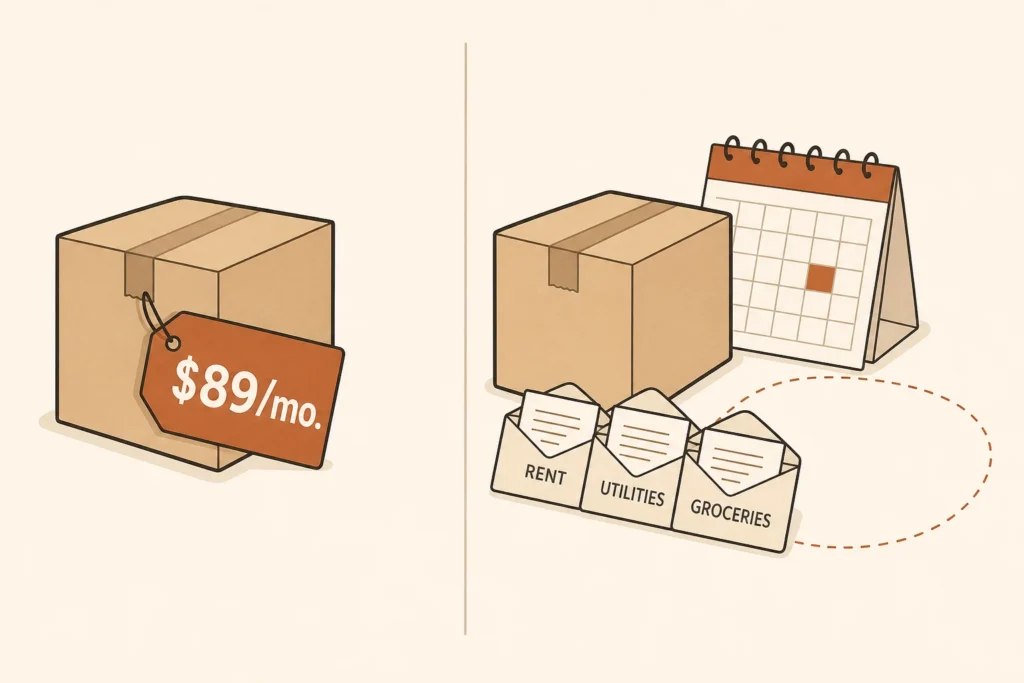
I once caught myself treating a small installment as harmless because I was looking at it by itself, then I wrote it beside two renewals and an insurance bill due the same week, and small had become crowded, which was the part the checkout screen had neglected to mention.
Qualification Is a Lender Test, Not Your Affordability Test
| Lender qualification | Household affordability |
|---|---|
| Checks whether you meet a product’s underwriting criteria | Checks whether the payment works in your actual household |
| May consider debt payments relative to gross income | Uses take-home income and the timing of bills |
| Focuses on obligations captured by the application | Includes essentials, irregular costs, savings, and recurring spending |
| Can produce an approved amount | Produces your own workable payment limit |
Debt-to-income ratio, one measure lenders may use, compares monthly debt payments with gross monthly income, and acceptable limits vary by lender and product. Your household test needs to be stricter in a different way: it must use the money that reaches your account and recognize expenses that do not appear neatly in a debt ratio, including child care, groceries, repairs, and annual bills.
Use This Five-Question Payment Test Before You Commit
Run these questions in order because the first two determine whether your cash flow can carry the payment at all, while the remaining questions reveal whether the full commitment is worth what it will displace. This is more useful than a universal percentage because two households with identical incomes can have completely different timing, medical, transportation, and family costs.
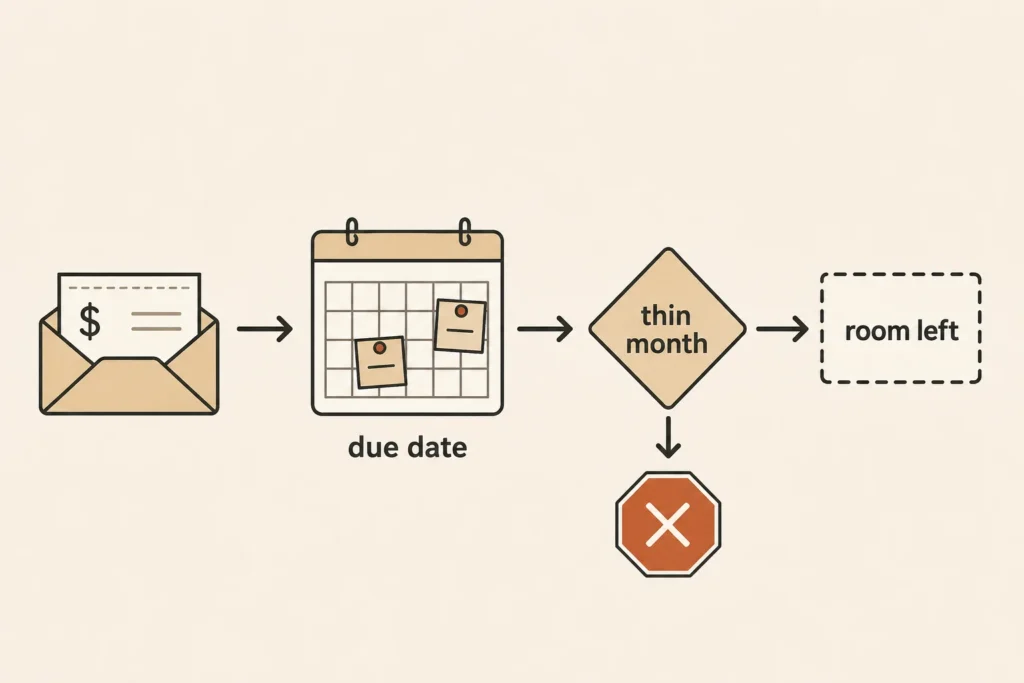
Does It Fit in My Thin Month?
Use your lowest predictable take-home month or a month with a known heavy expense, then subtract essentials, existing obligations, planned savings, and monthly set-asides for known irregular costs. The payment passes only if it fits without putting groceries on a credit card, skipping a necessary bill, or pretending the annual registration and holiday travel will somehow pay for themselves.
Can I Cover It on the Date It Is Due?
Put the payment on a week-by-week calendar beside paycheck dates and major bills, then calculate the running balance. A monthly surplus does not help if the account falls short ten days before the next paycheck, so test the actual date rather than relying on a monthly average.
What Is the Whole Promise, Not Just the Monthly Number?
For a loan, review the APR, finance charge, amount financed, fees, number of payments, total of payments, upfront cost, and whether the scheduled payment can change, while for a subscription, calculate at least a year of service. Longer terms can shrink the visible payment while increasing the total financed cost, and I find that trick especially annoying because the expensive option suddenly looks tidy rather than expensive.
What Else Is Already Claiming This Money?
Add up debt minimums, fixed installment plans, BNPL payments, required memberships, and recurring charges you cannot quickly or realistically stop. A contractually fixed payment is not the same as a cancelable subscription, but both reduce this month’s flexibility, and several small installments can crowd the same paycheck even when each looks harmless alone.
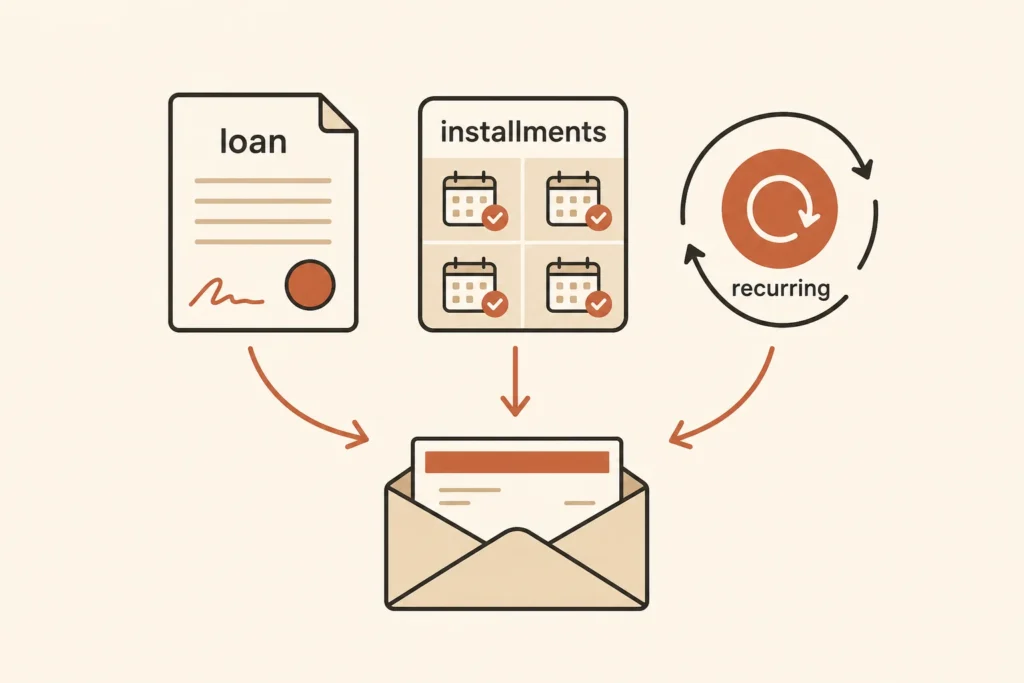
What Will This Crowd Out, and Am I Choosing That on Purpose?
Name what will shrink if you accept the payment: your buffer, grocery flexibility, debt reduction, repair money, planned savings, or spending you genuinely value. I would rather see an honest trade-off than a tidy budget that assumes nothing else will happen, so the payment passes only when you accept what it replaces and still retain room for ordinary mistakes and uneven months.
If the Answer Is No, Do Not Solve It With a Longer Term Alone
If the payment fails the thin-month or due-date test, it is not affordable yet, even if a seller can stretch the term until the monthly number behaves. A smaller payment is useful only when the total commitment still makes sense and the household has room to absorb it.
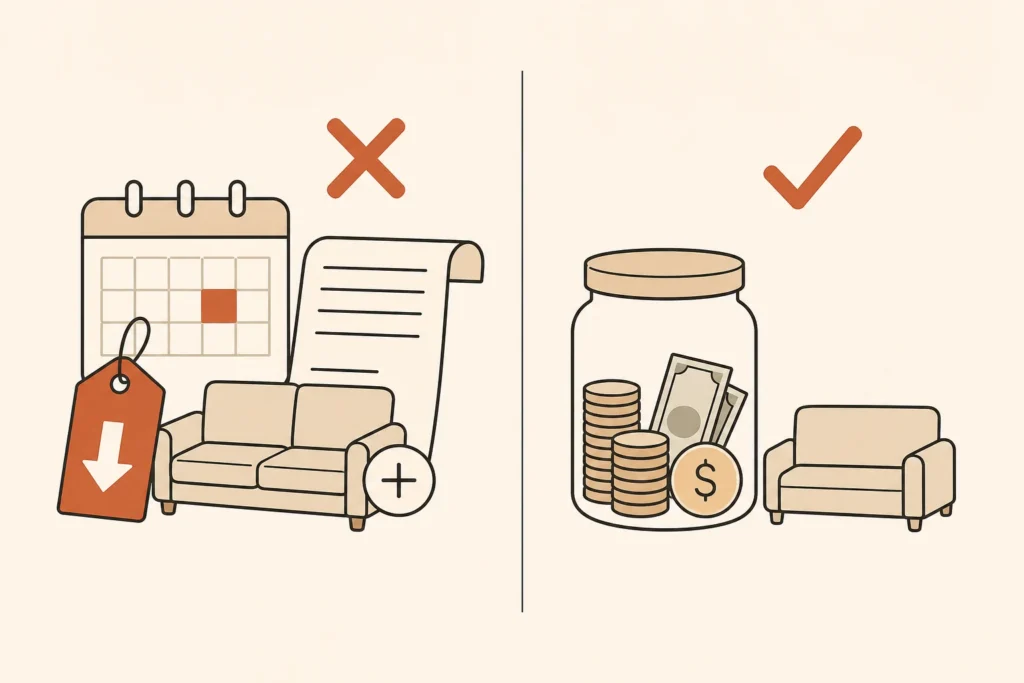
- Delay the purchase and keep the proposed payment in your account for a few months, which tests the cash flow while building an upfront amount.
- Reduce the price or scope instead of financing every feature, upgrade, or add-on.
- Save a larger upfront amount, but keep enough cash for expected bills rather than emptying your buffer to force a lower payment.
- Wait until an existing installment obligation ends, then decide whether the freed-up money should support the new payment or another priority.
Delay is not always available, and an urgent vehicle, appliance, or other essential replacement may require financing even when the payment is not comfortably affordable. In that case, reduce the purchase scope, reject optional add-ons, compare full costs and fees, and identify which category will absorb the payment, because making the trade-off visible is damage control even when it cannot erase the shortage.
The One-Sentence Decision
Sources and references
- Consumer Financial Protection Bureau: What is a debt-to-income ratio? (2023-08-28 (last reviewed))
- Consumer Financial Protection Bureau: What is a Truth-in-Lending disclosure for an auto loan? (2024-03-08 (last reviewed))
- Consumer Financial Protection Bureau: Creating a cash flow budget (2021-08)
- Consumer Financial Protection Bureau: CFPB Research Reveals Heavy Buy Now, Pay Later Use Among Borrowers with High Credit Balances and Multiple Pay-in-Four Loans (2025-01-13)
- Federal Trade Commission: Buying a Used Car From a Dealer