


A bigger-than-usual Friday deposit can make a new phone payment, subscription, or upgraded plan look completely reasonable. Then hours shrink, tips cool off, or a client pays late, and the payment stays put even though the income that justified it has vanished.
The fix isn't to predict every paycheck perfectly. Build recurring commitments around a low-normal income level, then decide in advance what better weeks must accomplish before temporary income quietly becomes permanent spending.
Averages can forecast the year, but they cannot fund a low week
An annual average is useful for seeing seasonal patterns, estimating long-term earning capacity, and planning goals. It becomes dangerous when it approves a recurring payment, because the average contains strong periods that may not be available when that payment comes due.
Test a new monthly commitment against your low-normal income after required tax reserves and known irregular bills. If the payment fits only when you use average income, every slow period will need a rescue from a future good one, and I don't consider that affordable.
Choose a low-normal baseline, not the bleakest number you can find
Your baseline should reflect an ordinary lean period that is likely to happen again, not an unusually good average or a one-time crisis.
Use six to 12 months of income actually available after withholding or tax reserves, and include a complete busy and slow cycle if your work is seasonal. Choose the lowest ordinary four-week or monthly total that recurs, excluding a one-time crisis but keeping predictable slow seasons in the picture.
With little income history, use the lowest completed pay period as a temporary floor and revise it each month. Treat that floor as the approval limit for subscriptions, leases, installment plans, and other recurring costs, which must fit alongside tax and irregular-bill set-asides.
Give baseline income only its essential jobs
Separate expenses by how they behave when income drops. This prevents a flexible cost from masquerading as fixed and an annual cost from pretending it doesn't exist.
| Bucket | What belongs here | Planning rule |
|---|---|---|
| Baseline bills | Housing, basic utilities, insurance, phone, child care, work transportation, minimum debt payments, groceries, and tax reserves | Must fit within low-normal income |
| Variable spending | Extra groceries, changing fuel costs, household purchases, eating out, personal spending, and fun | Can flex, but does not need to become zero |
| Irregular obligations | Registration, annual insurance, maintenance, school costs, gifts, medical copays, and nonmonthly bills | Divide the amount needed by the paychecks or months left before it is due |
Classify costs according to your actual life, since a work tool or caregiving expense may be essential even if someone else's template calls it optional. It irritates me when a budget calls registration or annual insurance a surprise, because irregular does not mean unknowable, and pretending otherwise guarantees an ambush.
Use good weeks in a fixed order so they do not create bad months
When income arrives above your baseline, run the surplus through the same order every time. The order matters because later goals should not consume money already needed for taxes or the next lean period.
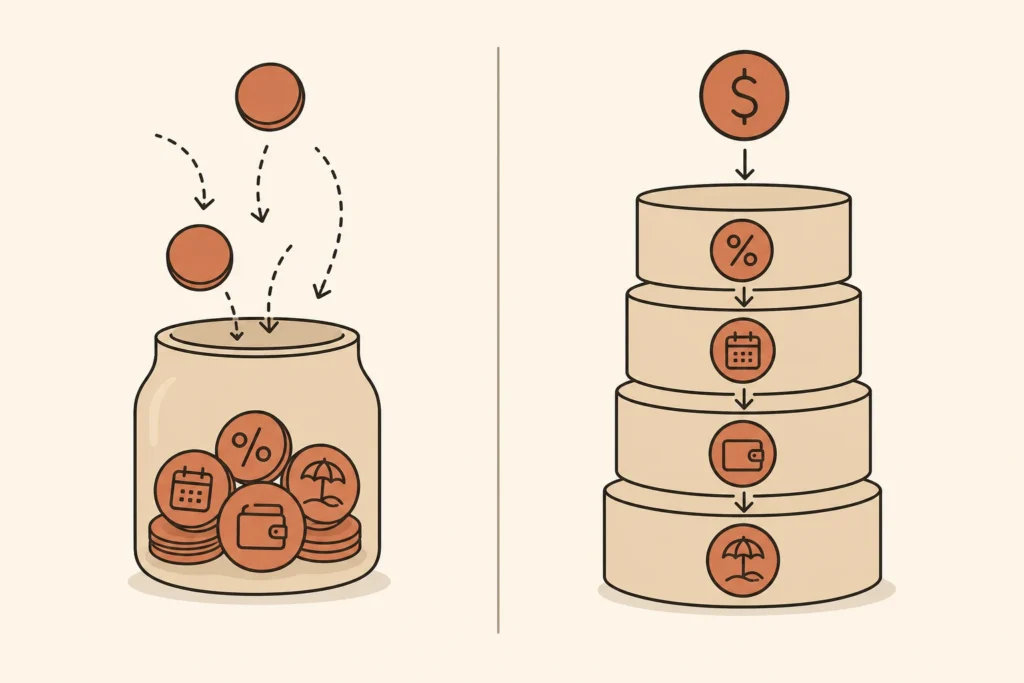
- Reserve taxes on freelance, contract, gig, or other income without enough withholding. The amount varies, so use current IRS tools rather than copying a universal percentage.
- Catch up any baseline bill or minimum payment that is already due or at immediate risk of falling behind.
- Fund the next low-income period and refill any irregular-bill category that is behind schedule.
- Build a separate cash buffer, with one upcoming baseline period as a useful first milestone rather than an intimidating slogan-sized target.
- Send what remains to high-interest debt, a specific savings goal, or a planned amount of enjoyable spending. Fun belongs in the plan, but it should spend true surplus rather than money wearing a temporary disguise.
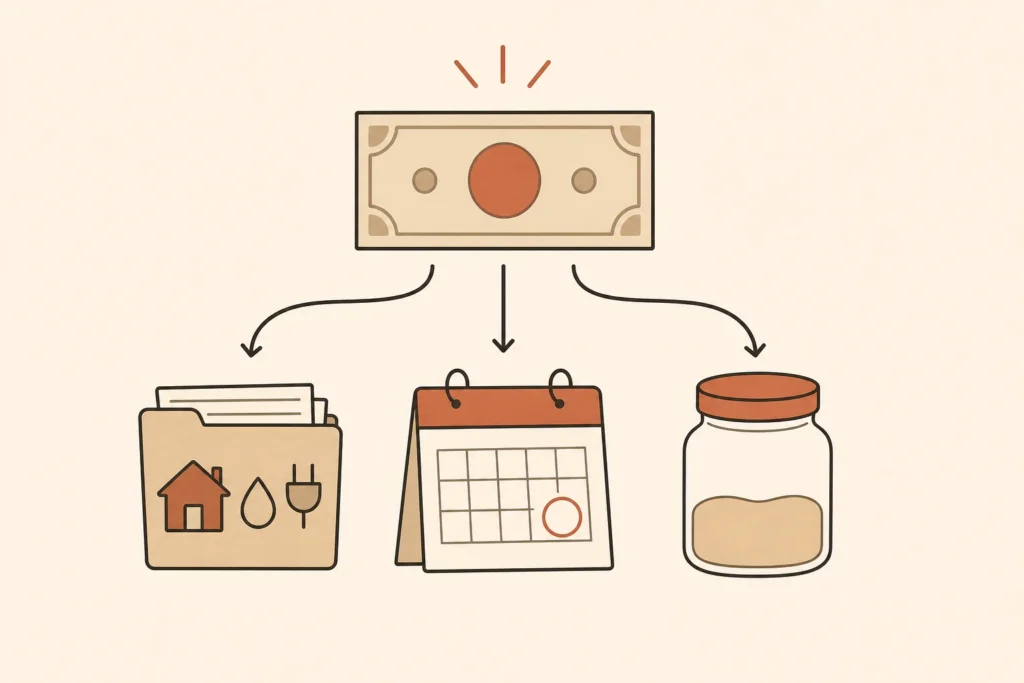
I once caught myself looking at a strong deposit and mentally adopting three new subscriptions before the money had even cleared. Recurring charges become remarkably charming when a good week is doing the sales pitch, so let the baseline decide whether they stay and use one-time money for one-time pleasures instead.
Put seasonal income and annual bills on the same calendar
Make a 12-month view showing expected slow seasons, annual or quarterly bills, and due dates. For each known bill, divide the amount still needed by the paychecks or months remaining, then treat that smaller set-aside as a current obligation instead of waiting for the full bill to land.
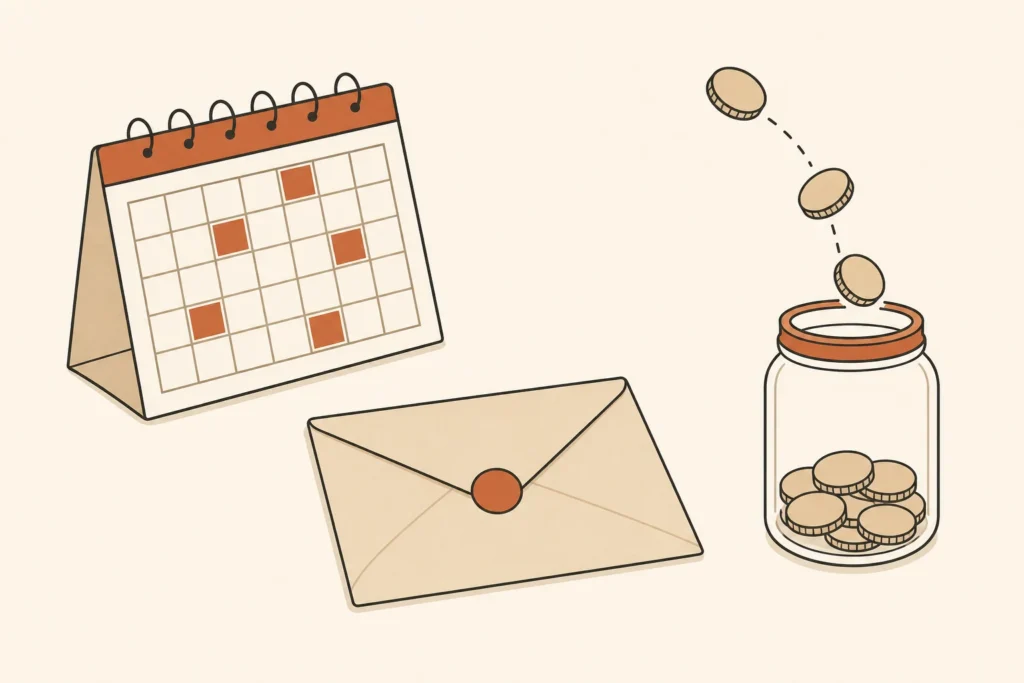
A high season has two jobs, paying today's bills and pre-funding the low season, and it isn't evidence that your household has permanently gained more monthly income. A brief weekly check of actual deposits, upcoming payments, and the next due dates will expose timing gaps that a monthly total hides, while the baseline still tells you what the household can afford overall.
Know when income volatility is really a recurring deficit
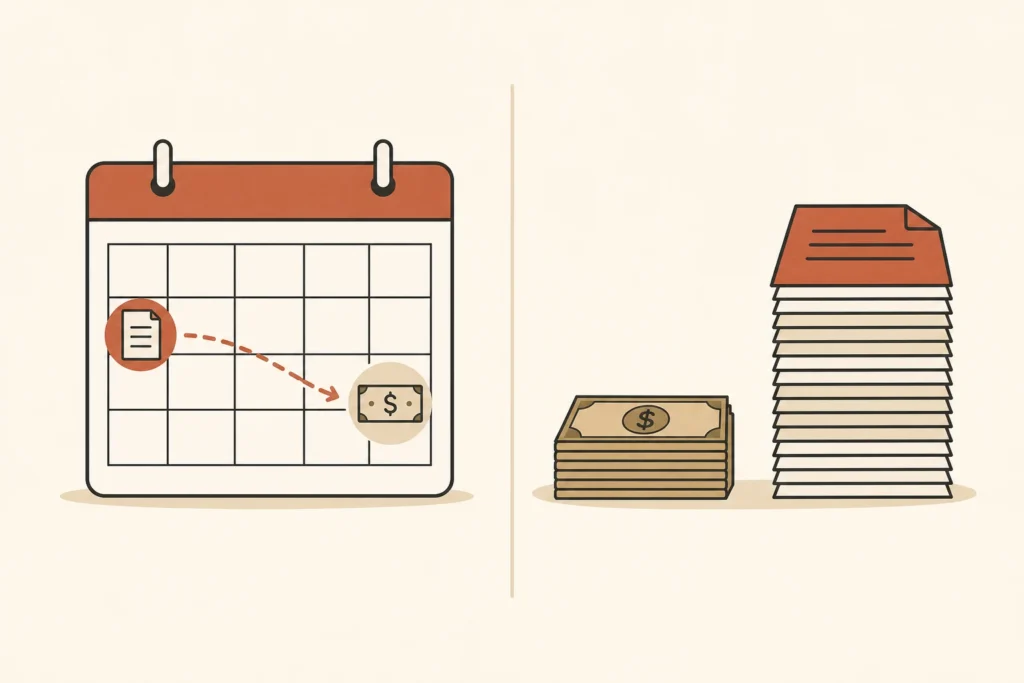
A timing problem calls for better due-date alignment, planned set-asides, and a buffer. A recurring deficit requires changes to fixed costs, minimum debt payments, bill arrangements, available work supports or benefits, or income, because determined tracking cannot close a mathematical gap, and I get frustrated by advice that treats that gap as a motivation problem. List the next four weeks of expected deposits and due dates, calculate the baseline gap, and reject any new recurring commitment that number cannot support.
Sources and references
- Consumer Financial Protection Bureau: Creating a cash flow budget (2021-08)
- Consumer Financial Protection Bureau: Assess your spending (2024-12-12)
- Neighborhood Trust Financial Partners: How to Stop Living Paycheck to Paycheck: 5 Realistic Steps (2026-05-28)
- Internal Revenue Service: Estimated taxes
- Consumer.gov: Making a Budget (2024-08)