


- Inflation check: $1,000 isn’t the same $1,000 anymore
- Why $1,000 fails in real life (even when you’re being responsible)
- So what should you save instead? Think in layers, not a single magic number
- Step-by-step: calculate your minimum ‘real’ emergency fund in 15 minutes
- Other things that doom emergency funds
- The takeaway: your emergency fund should be expense-based
- FAQ
Here’s something you’ll hear from people who preach about slip-ups and falling off the wagon: you can’t build a successful emergency fund on nostalgia. The $1,000 emergency fund became a popular “starter” goal in part because it’s something of a fait accompli. It’s simple; it’s motivating, and it’s achievable even with a minimum-wage job. But in 2026, even a small surprise bill can easily exceed $1,000—often by a lot. If your emergency fund is meant to keep you from going into debt (or avoiding the spiral deeper into debt), it has to fit today’s reality, not some 90s ideal.
TL;DR
$1,000 is often nowhere near big enough to cover commonly encountered “one-and-done” emergencies like a health insurance deductible, one month of rent, or a big home repair. (wecarewevote.aha.org).
Inflation is one big reason for that: based on CPI-U annual averages, $1,000 back in 1992 has increased purchasing power that is nearly equivalent to nearly $2,295 in 2025. (bls.gov).
Most experts nowadays prefer to tie emergency savings to expenses—not to some arbitrary figure amount—a few months’ worth of essential money. (finra.org).
Layering pragmatically: First, a tiny buffer. Second, a larger pool sufficient to cover most insurance deductibles. Finally, use whatever is left over to fund a job-loss savings plan. (finra.org).
How much is “my number”? Depends on various risks you face: Are you married/widowed/single? Is your employment steady? Is your health poor or fine? How quickly can you cut your costs? (finra.org) Few emergencies are socially acceptable on your terms. $1,000 won’t cover most modern emergencies

If you haven’t done the math of how far $1,000 will go against the problems life throws at you, we’ll save you the arithmetic — it’s not enough. Look at these figures that routinely crop up in everyday life:
| Expense type | Why it matters | Real-world benchmark (from sources) |
|---|---|---|
| One month of rent | If you lose income, the emergency is often “cash flow,” not a single bill | U.S. median gross rent was about $1,487 in 2024 (ACS 1-year estimate). (data.census.gov) |
| Health insurance deductible (single coverage) | Even with insurance, you may owe a large amount before coverage kicks in | Average general annual deductible was $1,787 in 2024 for single coverage (KFF survey, summarized by AHA News). (wecarewevote.aha.org) |
| Water heater replacement | Home systems don’t fail on your schedule, and “no hot water” is rarely optional | NerdWallet cites installed costs that can be around $1,950 for tank installation (and higher for tankless). (nerdwallet.com) |
| A ‘small’ emergency plus a second hit | A single event is bad; two close together is what breaks budgets | The Fed’s SHED shows many adults can’t handle even $1,000–$1,999 using savings. (federalreserve.gov) |
Important: Benchmarks are not your bill. Your costs depend on location, deductibles, home type, and timing. The point is that $1,000 is commonly below the first “real” tier of risk for many households.
Inflation check: $1,000 isn’t the same $1,000 anymore
One reason the $1,000 target feels “smaller” is plainly purchasing power. Using CPI-U annual averages from the Bureau of Labor Statistics, the CPI-U was 140.3 in 1992 and 321.943 in 2025. (bls.gov)
That means $1,000 in 1992 dollars is roughly equivalent to about $2,295 in 2025 dollars (321.943 ÷ 140.3≈2.295). (bls.gov)
Why $1,000 fails in real life (even when you’re being responsible)
Modern emergencies are often insurance-shaped. If your largest risk is “I have to pay a deductible,” your emergency fund has to be at least deductible-sized. (wecarewevote.aha.org)
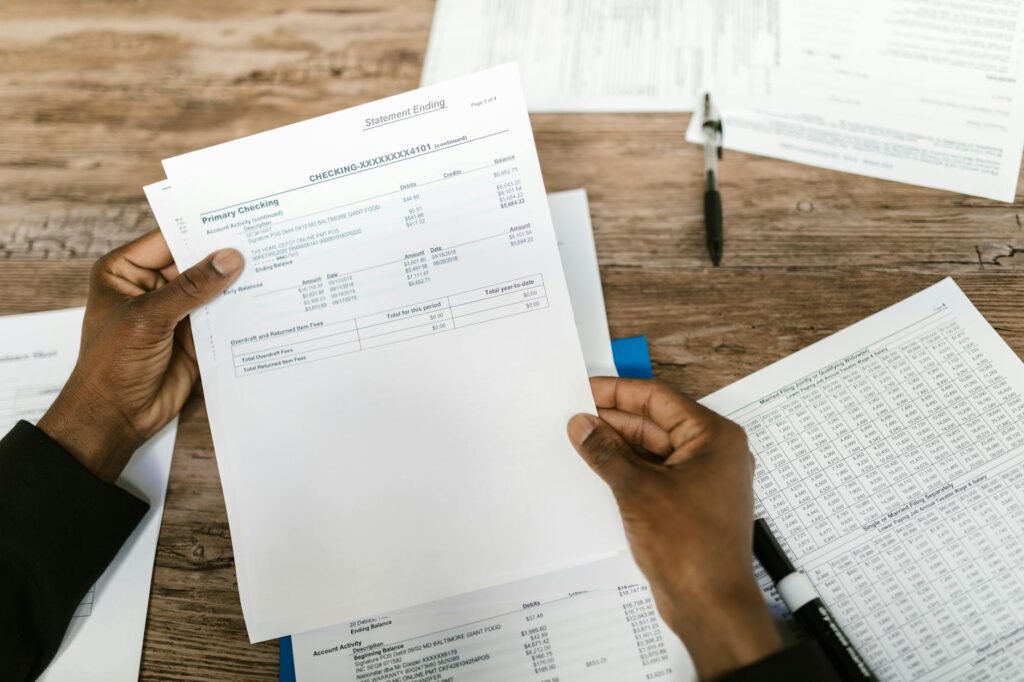
Housing is a cash-flow emergency. A job disruption doesn’t arrive as a neat invoice—it shows up as rent, utilities, groceries and transportation that still need to get paid. (data.census.gov)

Emergencies cluster. A $600 car issue followed by a $500 medical bill is not rare—and $1,000 disappears fast when life stacks problems. (federalreserve.gov)
A $1,000 fund can be psychologically comforting while still being mathematically fragile—especially if your baseline monthly essentials are already higher than $1,000.
So what should you save instead? Think in layers, not a single magic number
Many mainstream guidelines focus on months of expenses—often 3 to 6 months of essential spending—because rent, food, and utilities are what you must keep paying during disruptions. (finra.org).
But “3–6 months” can feel huge if you’re starting from zero. A more pragmatic (and feasible) way to build is to fund your emergency savings in layers—each one protecting you from a different type of blow.
| Layer | Target | What it protects you from | How to know you’re ‘done’ with this layer |
|---|---|---|---|
| Layer 1: Shock absorber | $500–$1,000 (or one small bill) | Tiny emergencies (copay, minor repair, utility overage) and “I forgot this bill” moments | You can cover a small surprise without a credit card, and you stop ‘ping-ponging’ your checking account |
| Layer 2: Deductible buffer | Your highest likely deductible (health/auto/home) or a realistic out-of-pocket amount | The most common insurance-shaped emergency: you’re covered, but you still owe a lot | You can pay your biggest deductible without wiping out Layer 1. (wecarewevote.aha.org) |
| Layer 3: Income protection | 3–6 months of essential expenses (sometimes more for higher-risk situations) | Job loss, reduced hours, family crisis, or a longer-than-expected recovery period | You can pay core bills for months without new debt. (finra.org) |
Step-by-step: calculate your minimum ‘real’ emergency fund in 15 minutes
- Write down your most basic monthly essentials (not your whole fancy lifestyle): housing, utilities, basics of groceries, minimum debt payments, basic insurance payments, transportation to work, basic childcare.
- Write down your highest deductible (or highest likely out-of-pocket) between health, auto, renters/homeowners. Write the number down. (This is your Layer 2 target.) (wecarewevote.aha.org)
- Choose your income-protection months: 3 months if your income is steady and you have backstops if need be, 6 months (or more) if you have single income/ variable income/ working in a volatile industry. (finra.org)
- Do the math: essential 3 months expenses x number of months = Layer 3 target. Add Layer 2 (deductible buffer) unless your Layer 3 number already ranges high enough to speak comfortably to that.
- Make it actionable: set up a weekly automatic transfer to a separate account, and try to treat that like a bill. FINRA states that even putting aside ‘anything’ helps—and that 3 to 6 months is what many people favor. (finra.org)
A quick example (in case you want to sanity-check against your own number)
Let’s say your most basic essential monthly expenses (housing + utilities + groceries +minimum debt + transportation + insurance) boils down to $3,200. Your 3 months fund is $9,600. Your 6 months fund is $19,200. In that world, $1,000 here is not “bad”—it just simply isn’t built for the crises you’re literally trying to survive right now.
But I’m in debt. Is $1,000 useful as a starter fund? It can be—for sure, if you know what it really is. That’s why it’s the classic ‘starter emergency fund’ that a lot of people put away to reduce the odds that some tiny surprise runs the risk of forcing new debt. Heck, Ramsey Solutions represents $1,000 this way (as a starting out goal), not as an emergency fund fully,ü (999).
- A good amount of emergency fund to have. (Where): An emergency fund is not a speculative portfolio. You want funds available when you call on them, but not having them in such a accessible and inviting account that you’re tempted for unforced unwise access. FINRA writes that liquid, interest-generating accounts (say a plain old savings account) where access is penalty free, and preserves your money for the next time you need it (999).
- Best for most of us: a separate high-yield money market deposit account (easy like direct cash access, but without all that wretched temptation). (999).
- If you want more discipline, you might divide your fund into two buckets. Cash for direct access and a second bucket for staying flush for a longer period, more healthy margins for a j0b layoff but still liquid.
- What not to put an emergency fund into: volatile speculative things that involve market time. You want money to do what money does; when you need some for purchasing in a hurry it’s horrible to the wall to find your fund hiding under the bed—and sneaking through a hole to get there.
- Verify you are targeting the right amount for your emergency fund personally (so, you are not guessing).
- Open your insurance declaration pages. Write down auto deductibles, health deductibles, renters or home-per-policy deductibles. You want to survive at least one level of deductible, you want your emergency fund to not be expended in one go. . . (999). Housing is typically our biggest monthly essential expense, and national rent medians have already climbed past $1,000. (data.census.gov)
- Price one ‘likely’ repair for your life stage (car, appliance, home system). Get at least two local quotes, so you’re not just relying on national averages. (National benchmarks can help you sanity check.) (nerdwallet.com)
- Look over your last 3 months of transactions, and label “essential vs. optional.” Your emergency fund is built on your essential piece, not your whole spend.
Other things that doom emergency funds
- Calling it an emergency fund but using it for predictable costs (holiday spending, annual subscriptions etc., regular car repairs). Set up sinking funds for these instead.
- Keeping it in the same checking account you spend from (then it quietly slips into ‘extra money’ territory).
- Assuming you won’t often pay medical and insurance cost-sharing out of pocket (wecarewevote.aha.org)
- Stopping at $1,000 for longer than is ideal. Even the Fed’s household survey data show a fair share of people can’t manage bigger shocks solely with savings. (federalreserve.gov)
The takeaway: your emergency fund should be expense-based
A fixed dollar amount feels good because it seems certain. But modern life is chaotic, and costs vary too much (and change too fast) for us all to need the same amount. [begin quote] Government and industry guidance tends to point back to expenses—usually 3 to 6 months as a baseline, then adjust up or down based on risk. (finra.org) [end quote]
If $1,000 helps you start, use it. But don’t stop there. Build layers until your savings can absorb the emergencies you’re statistically likely to face: a deductible-sized bill, a housing month, or an income interruption.
FAQ
How much should I have in an emergency fund in 2026?
There isn’t one universal number. A common guideline is 3–6 months of essential expenses, then adjust based on your risks (income stability, dependents, health needs). (finra.org)
Is $1,000 an emergency fund or just a starter fund?
For many households, it’s better thought of as a starter buffer. Davidson said Ramsey Solutions frames $1,000 as a “starter emergency fund” step, not a fully funded plan for job loss or major bills. (ramseysolutions.com)
What’s a better starter goal than $1,000?
A useful next step is “highest deductible” (or realistic out-of-pocket amount) plus a small buffer. Health plan deductibles alone can exceed $1,000 for many workers. (wecarewevote.aha.org)
Should I pay off debt or build my emergency fund first?
Many people build a small buffer first to avoid adding new debt when something breaks, then work on debt while continuing to expand the fund. If your payoff timeline is long, staying at $1,000 for a long time can increase your risk of going back into debt during a bigger emergency.
Where should I keep an emergency fund?
Keep it liquid and accessible. FINRA suggests using “liquid, interest-bearing account, like a savings account or credit union account, to withdraw funds without fear of penalty. (finra.org)
How do I know if my emergency fund is too small?
If one deductible, one month of housing, or one major repair would wipe it out, it’s likely too small for your current risk. Use your actual deductibles to size your fund. (wecarewevote.aha.org)