The No-Spend Challenge That Exposes Your Worst Money Habits
A no-spend challenge isn’t about deprivation—it’s a short, structured reset that reveals where your money leaks, what triggers your “just this once” spending, and which habits quietly sabotage your budget. Here’s a step‑
Table of Contents
- What a No-Spend Challenge Is (and Isn’t)
- Why This Challenge Exposes Your Worst Money Habits So Fast
- Choose Your Version: Weekend, Week, or Month
- Set the Rules (Write Them Like a Contract With Yourself)
- The Habit-Exposure Method: Track “Urges,” Not Just Purchases
- The “Subscription Trap”: The Habit You Don’t Know You’re in Until It’s Too Late
- What to Do When You “Fail” (Because You Will Slip Somewhere)
- The Post-Challenge Habit Audit
- How to Verify You Really Saved Money (Not Just Delayed Spending)
- Common Pitfalls (and Resolutions that Keep You Moving Forward)
- A Simple 7-Day No-Spend Plan You Can Start Any Monday
- FAQ

Photo by www.kaboompics.com on Pexels. (Pexels License)
A no-spend challenge (or “no spend month”) is a kind of little science experiment you do for a set amount of time where you stop (or seriously limit) discretionary spending so that you can see what’s actually controlling your spending decisions when you don’t put any thought into it. Done well, it’s not a purity test but a diagnostics tool: revealing the “default purchases” you prefer to make, the moments when you spend for relief and distraction, the subscriptions and convenience costs that nibble down into your checking account.
TL;DR Do this:
- Pick some length of time that you’ll actually finish (7 days is bad-ass enough).
- Write down what “allowed spending” includes, so that you can’t argue with yourself about it mid-week.
- Track everything you “try to buy” so that you’re looking at habit data, not just what you actually spent.
- Do a post-challenge habit audit: trigger → category → workaround → new rule.
- Make one or two permanent habits based on the insights (scrubbing up your subscriptions, meal plan, friction for online shopping, etc).
What a No-Spend Challenge Is (and Isn’t)
A no-spend challenge usually mean pausing nonessential (discretionary) spending for some length of time (often a week, a weekend, or a month) as a way to reset habits and reallocate cash to goals. You’ll see many personal finance institutions suggest that this is a way of making your spending behaviours “visible” since it strips out the easy, automatic purchases you don’t notice in your day to day. (fidelity.com)
- It is: a structured pause on discretionary spending, with clear rules and a tracking method.
- It is not: skipping rent, avoiding necessary medical care, or “white-knuckling” through emergencies.
- It is not: a long-term plan by itself—your goal is to learn what needs a better system afterward.
- It is not: a reason to binge-spend the day the challenge ends (that’s a sign the rules were too rigid).
Why This Challenge Exposes Your Worst Money Habits So Fast
Most “bad money habits” aren’t big, dramatic mistakes. They’re tiny, frequent decisions made on autopilot: grabbing convenience food because the day was hard, tapping “buy now” because you’re bored scrolling, or letting an old subscription renew because canceling feels annoying.
When you remove discretionary spending for a short period, you don’t just save money—you surface the situations that create spending pressure. That’s why many budgeting guides emphasize tracking spending behavior closely: the insight comes from seeing patterns, not from willpower alone. (consumerfinance.gov)
| Habit | How it shows up | The telltale thought | What to test as a fix |
|---|---|---|---|
| Impulse buying | Small “treat” purchases, flash sales, checkout add-ons | “It’s only $___.” | 24-hour rule + a wish list note in your phone |
| Convenience spending | Delivery, drive-thru, last-minute groceries | “I don’t have time.” | Simple food plan + backup pantry/freezer staples |
| Subscription leakage | Auto-renewals you forgot, free trials that roll into paid plans | “I might use it later.” | Monthly subscription audit + calendar reminders |
| Social spending default | Eating out because friends suggest it, “splitting” bills you didn’t plan for | “I don’t want to be the difficult one.” | Suggest a low-cost alternative before you meet |
| Stress spending | Online browsing after a hard day, buying to change your mood | “I deserve this.” | Replace with a non-shopping decompression routine (walk, shower, call someone) |

Photo by ready made on Pexels. (Pexels License)
Choose Your Version: Weekend, Week, or Month
If you’ve never done this before, start smaller than you think. A 7-day challenge is long enough to reveal patterns (work lunches, boredom shopping, “quick” convenience stops) without turning into an endurance contest.
| Format | Best for | Watch-outs | Success metric |
|---|---|---|---|
| No-spend weekend (2-3 days) | Quick reset, first-timers | Easy to “cheat” by stocking up Friday | Zero discretionary purchases + complete tracking |
| No-spend week (7 days) | Finding weekday triggers and routines | Work-related convenience spending shows up hard | Fewer “unplanned stops” + a clear list of triggers |
| No-spend month (30 days) | Deep habit change + bigger savings goals | Risk of burnout and rebound spending | A sustainable post-month plan (rules + systems) |
| Category no-spend (30 days) | Targeting one leak (restaurants, Amazon, apps) | You may shift spending to another category | Measurable reduction in the target category |
Photo by Viridiana Rivera on Pexels. (Pexels License)
Set the Rules (Write Them Like a Contract With Yourself)
Most no-spend challenges fail for one reason: vague rules. If the rule is “don’t spend,” your brain will negotiate endlessly: “Does this count?” “What if it’s on sale?” “But I already had a hard day.” Your goal is to remove negotiation.
- Pick dates and name the finish line. Example: MondaySunday, or the 13th3rd or whatever.
- Define essentials (allowed) vs. discretionary (paused). Use categories, not vibes. Example: What about coffee? Is it special or is it “allowed.”
- Add a safety clause: what counts as an emergency and how you’ll document it.
- Decide how you’ll handle planned obligations (birthdays, travel, school fees). Either pre-spend them before the challenge, or explicitly permit their use—don’t “decide later.”
- Pick your tracking medium (notes app, spreadsheet, or spending tracker worksheet). Tracking is the point.
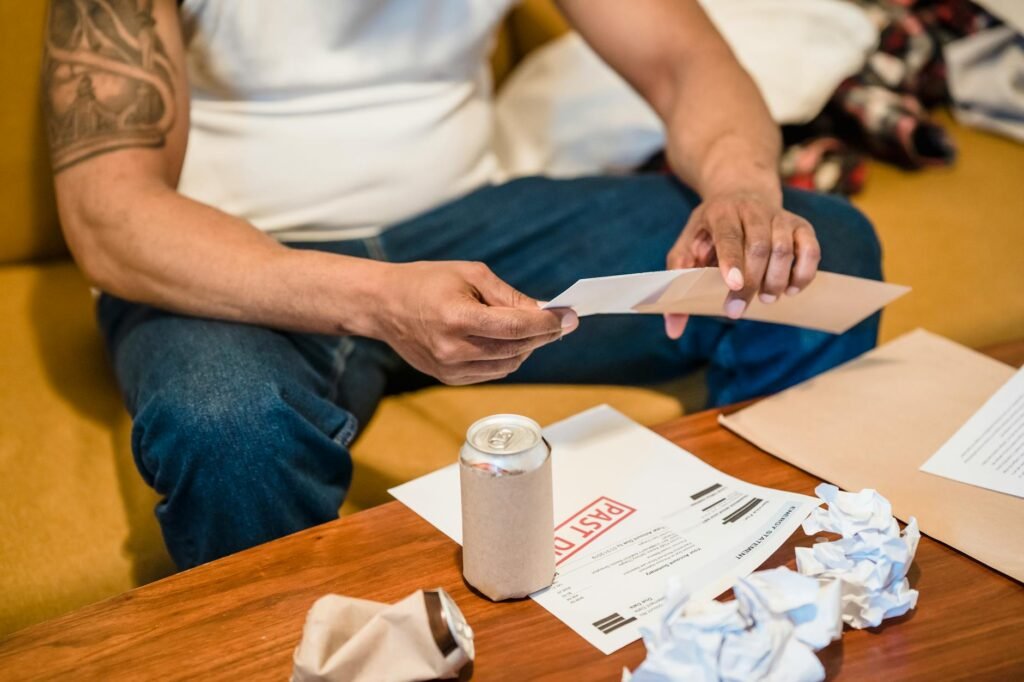
Photo by Nicola Barts on Pexels. (Pexels License)
| Allowed (essentials) | Paused (discretionary) | Gray area (decide now) |
|---|---|---|
| Groceries for planning meals | People outside the house dining, delivery, coffee runs | Work lunches; pack your own or use stocks at home? |
| Transportation to or from school or work | People outside the house rideshare “for fun” | Car gas; car wash forbidden? |
| Necessary medications and health requirements | Beauty extras, spa, “wellness” impulse buys | Supplements; only if the doctor prescribed them? |
| Bills you already owe, rent/utility debts, minimum debt payments | New gadgets, home decor hobby supplies | Gifts; allowed for a set amount, or on pause? |
| Essentials for Kid meals | School aging; kid “just because” specialty toys | Activities; can your family focus on free options or a week’s limit? |
The Habit-Exposure method: Track “Urges,” Not Just Purchases
If you’re only tracking what you spend, you won’t see some of the most helpful data: what you almost spent. During your challenge, take note each time you wanted to spend (whether you actually did or not!) This is how you catch your worst habits red-handed.
[Simple “urge log” template (the fastest way to find your triggers)]“urge log” template (the fastest way to find your triggers) Tracking your urges is a precursor to figuring out your triggers. Consumer-focused budgeting resources often recommend tracking spending for a whole week or month to see where your money goes and spot changes you can make. Think of the urge log as the “why” behind that tracking—because the same category (like “food”) can be in and out of need mode at different moments. (files.consumerfinance.gov)
A Practical Setup Checklist (So You Don’t Fail on Day 2)
- Do a quick pantry/fridge scan and plan 3–5 “default meals” you can make in a pinch (pasta, eggs, smoothies, etc) that use what’s already there.
- Delete saved cards from the stores you impulse-buy from (or log out). Add friction on purpose.
- Unsubscribe from all retail promo emails and push notifications for the duration of the challenge.
- Make a “replacement list”: things you can do instead when the urge to shop strikes (library, walk, friend hang, workout video).
- Communicate to your household (or your best friend) what you’re up to, and what support looks like.
- Move the money you ‘would have spent’ daily/weekly into its own bucket or account, so that you can see what you’ve saved.
The “Subscription Trap”: The Habit You Don’t Know You’re in Until It’s Too Late
No-spend challenges bring to light something interesting and irritating: some of your ‘spending’ isn’t even a choice you’re actively making. It’s auto-renewals, free trials that auto-converted to paid, and services you forgot to cancel.
The Federal Trade Commission (FTC) has warned consumers about free trials and negative option marketing—considered ‘consent’ to a company for it to bill you if you fail to cancel. The FTC has also published guidance and updated its Negative Option Rule (commonly referred to as ‘Click to Cancel’), updating its disclosures to be clearer and easier to cancel—check the FTC for the latest details and dates. (ftc.gov)
- Make a list of every subscription you can think of (streaming, apps, memberships, boxes, cloud, ‘premium’).
- Confirm with your last 60–90 days of bank/credit card statements (catches the ones you forgot!).
- For each, ask: ‘would I buy this again today at full price?’ If not, cancel or downgrade.
- Set reminders to assess for renewal 3-5 days before billing dates. If cancels are confusing, document what you attempted (screenshots/notes) and Google “cancel account” + (service name). Get directions from the horse’s mouth.
What to Do When You “Fail” (Because You Will Slip Somewhere)
Look up that move in your personal handbook. You have more data now.
If you bought something you didn’t plan for, the challenge still worked, because you know the trigger and environment now.
If you slipped on food: prioritize passing meals in 10 minutes or less.
If you slipped online: add friction (no saved cards; maybe no site on your phone during certain hours).
If you slipped socially: script a standing kindness reply (“I’m doing a no-spend week—shall we do coffee at home or a walk?”)
If you slipped because you were wrecked: you need some gentle mind shifts, not a stricter plan.
This is where the real stuff starts, now.
The Post-Challenge Habit Audit
This is the “for real” part. When the challenge ends, don’t just high five yourself about it. Use that time for the most useful quarter hour of your week.
Spend thirty focused minutes answering these questions as you refer to your urge log and your bank transactions:
- What were the top 3 “things that get me every time” you were hit with? (Bored scrolling? Time crunch? Social invite? The 3pm meltdown after work?)
- Where did you miss spending most? That’s where you need a workable budget, not a rule with ban-drawn lines. What did you not miss at all? That’s a cancellation or “downgrade” opportunity (think subscriptions and impulse buys).
- What did you learn about your environment? (Example: passing a store en route to work means impulse buys via “just looking”).
- What one system would block 80% of your leaks? Pick just one or two so you’ll actually stick with ’em.
| What you learned | New rule | System that makes discipline easy | How you’ll check this worked |
|---|---|---|---|
| Lunch purchases happen on busytimes | No lunch buying Mon–Thu | Default lunch prep Sun + stash of indistructables | Compared with lunch spend at the same time last month |
| Shop purchases spike after sundown | No online shopping after 8pm | Phone apps/site blockers + wish list | Count up fewer orders and returns |
| Subscription reminders are invisible | Bill reminder on the 1st | Calendar reminder + list with renewal dates | Subscription total stays under my limit |
| Social time is unplanned | One planned “out” a week | Invite friends to free/cheap plans first | Stay within the weekly “fun” amount guilt-free |
How to Verify You Really Saved Money (Not Just Delayed Spending)
It’s easy to “save” money but spend it on accident at the end of the challenge. Verifying doesn’t allow that. Use a simple before/after check that’s based on your own transactions.
- Choose 3 categories: restaurants/delivery, online shopping, and convenience (gas station, pharmacy extras, etc.).
- Compare the challenge period to the same length out just before it (like this week and last week).
- Immediately move the difference to a separate bucket (or an extra debt payment if that’s your goal).
- Write down any purchases you delayed and plan to make. Schedule them and limit them—don’t let them ambush your next paycheck.
Common Pitfalls (and Resolutions that Keep You Moving Forward)
- Mistake: Rules are too rigid. Fix: Allow a set “buffer” category, like $10/week for true misc needs.
- Mistake: You don’t plan meals. Fix: Choose 3 default breakfasts, 3 lunches, 3 dinners for the challenge. (Toss them if you didn’t prep).
- Mistake: You forget subscriptions. Fix: Statement check and 10-minute cancellation session on day 1.
- Mistake: You “stock up.” Fix: Allow typical groceries, but pause 48 hours before No Spend’s start date.
- Mistake: You rebound-spend. Fix: Schedule one intentional treat purchase and pre-set a strict limit, then stop.
A Simple 7-Day No-Spend Plan You Can Start Any Monday
- Day 0 (Sunday): Write rules, do a grocery plan, set up your urge log, remove shopping friction (log out, remove saved cards).
- Day 1 (Monday): Track every urge. Don’t change your life—just observe and log.
- Day 2 (Tuesday): Identify your top trigger so far and add one guardrail (app blocker window, pack snacks, unsubscribe promo).
- Day 3 (Wednesday): Do a 20-minute subscription audit from your statement history.
- Day 4 (Thursday): Replace one convenience habit with a default (example: coffee at home; leftovers lunch).
- Day 5 (Friday): Plan a free/low-cost weekend activity so you’re not tempted to spend out of boredom.
- Day 6–7 (Weekend): Review your log, total the “avoided spends,” and write 2 permanent rules you’ll keep next week.
FAQ
Can I do a no-spend challenge if I’m in debt?
Yes—many people use it to free up cash flow. Keep it safe and realistic: pay required bills and at least minimum debt payments, then pause discretionary spending. If you’re struggling to keep up with payments, consider getting help from a reputable nonprofit credit counselor.
What counts as “no spend”—am I allowed to buy groceries?
Yes! Most no-spend challenges allow essentials like groceries and transportation, while pausing discretionary categories like restaurants, clothing, and miscellaneous tacking. The key is to make sure you define your allowed categories in writing before you embark on the challenge.
Should I do a no-spend month or a no-buy month?
A no-spend month typically means you continue to pay for essentials but otherwise stop discretionary spending. A no-buy challenge often focuses on not buying any clothes, makeup, or home decor, for example. If your biggest spending habits are category-specific, going no-buy can be easier and more targeted.
How do I decline social plans and not sound awkward?
Try: “I’m doing a no-spend week/month—can we do a walk, a park hang, or coffee at my house instead?” If you do bite the bullet and spend socially, plan in advance, and determine what your hard limit will be for that occasion it’s not a surprise.
What if I already paid for something? For instance, I belong to a gym but I’ve already paid for the year. Shouldn’t I go?
Yes! Use what you’ve already paid for. It’s the perfect time to try to get some value from sunk cost. The goal of the challenge is to begin curbing new discretionary spending, not to beat yourself up for past mistakes.