


If someone followed you around for a week and wrote down every unplanned purchase over $5, the total would probably shock you more than your actual paycheck. Not the rent, not the car note. The $7 iced coffee, the $14 takeout “because today was rough,” the $23 Amazon thing you forgot you ordered until it showed up on your porch.
When I was editing spending diaries for a behavioral finance study back in 2019, I watched a 32-year-old engineer in Denver bleed out $486 in eight days on “little stuff.” He earned $108,000 a year and still carried a credit card balance of $6,230. He was convinced his problem was housing costs. It wasn’t. It was the dozen tiny hits that never felt like “real” spending.
If you’ve ever stared at your checking account and thought, “Where did it all go?”, you’re not broken, lazy, or bad with money. You’re normal. Your brain is wired to chase relief, novelty, and rewards, and modern spending apps are designed to make that wiring expensive.
What we’re going to do is drag those patterns into the light, put hard numbers on the “little” purchases, and build a few guardrails that don’t require superhuman discipline. It’s going to feel uncomfortably honest at points, especially when we get into why smart people still make dumb purchases.
Why Smart People Still Make Dumb Purchases
You can ace complex projects at work and still lose a stupid amount of money to impulse spending. The numbers back it up. A survey by Slickdeals found Americans spend roughly $450 a month on impulse purchases, which adds up to $5,400 a year for things they didn’t plan to buy and often don’t really need.
I worked with a 39-year-old software architect in Seattle earning $218,000. He managed teams, handled multimillion-dollar systems, rarely missed a deadline. Yet his credit card statements showed $612, $487, $731 in random late-night Amazon orders, month after month. Cables, specialty coffee gear, “productivity” gadgets, collectible figurines he barely remembered adding to his cart. Intellect wasn’t the issue. His brain was shot by 11 p.m., and that’s when temptation walked in.
Your Brain on Exhaustion and “Deserved” Rewards
Impulse spending runs on two engines: stress and decision fatigue. All day you’re using your prefrontal cortex to make choices, solve problems, and act like a responsible adult. That part of your brain is the one that says, “Wait, do I actually need this $129 ring light?” After 50, 80, 120 decisions in a day, that system gets tired. The emotional part of your brain, the one that loves quick rewards, doesn’t.
Here’s the counterintuitive part. The more accomplished and mentally drained you feel, the more your brain starts whispering, “You earned this.” That whisper doesn’t care whether “this” is a $19.99 app subscription, a $74 skincare set you saw on TikTok, or a $320 pair of headphones you didn’t budget for. A 34-year-old nurse in Chicago told me she only online-shopped on nights after brutal 12-hour shifts. Those were also the only nights her checking account took real damage.
So no, you’re not “too smart” to be above impulse spending. If anything, your heavy mental workload might be feeding it. The real question is how to build systems that protect your money when your brain is too fried to protect you.
The Hidden Triggers That Hijack Your Wallet

Your spending looks random, but it isn’t. Over 60% of impulse buys happen in response to emotions like stress, boredom, or sadness, according to consumer behavior research. That means most “oops, I bought it” moments are actually “I felt something and tried to fix it with money.”
I worked with a 29-year-old graphic designer in Denver who swore she had a “discipline problem.” She’d spend $37 here, $62 there, usually on clothes and random Amazon gadgets. Once we tracked it, a pattern smacked her in the face: almost every unplanned purchase happened between 8:30 and 10:00 p.m., after brutal days with her demanding boss. She wasn’t bad with money. She was stress-shopping on autopilot.
Your Brain Loves Patterns, Not Budgets
Your brain doesn’t care about your budget. It cares about relief and reward. If you scroll a retail app every time you’re stuck in traffic or waiting in line, your brain starts to link boredom with buying. You open the app, tap “Buy Now,” get a tiny dopamine hit, and the loop strengthens. Do that 40 times and your phone basically becomes a vending machine for your emotions.
A client of mine, a 34-year-old nurse in Phoenix earning $78,000, discovered she was dropping about $487 a month in “tiny” impulse charges. Almost all of them happened on her phone, during 15-minute breaks or right after night shifts, when she felt wiped and underappreciated. No big meltdown. Just quiet fatigue tied to quiet spending.
Here’s the tactical move: run a 7‑day impulse audit. Every time you buy something unplanned, write down four things: time, place, emotion, and purchase. “3:12 p.m., in car outside daycare, anxious, ordered $29 takeout.” Do this for a week without trying to “fix” anything yet. You’re just collecting receipts on your own behavior.
By day seven, you won’t be asking, “Why do I keep overspending?” You’ll be asking, “Okay, what do I do with the fact that 80% of my impulses hit in the same two situations?”
The $20 Lie: Why Small Treats Add Up to Big Regret
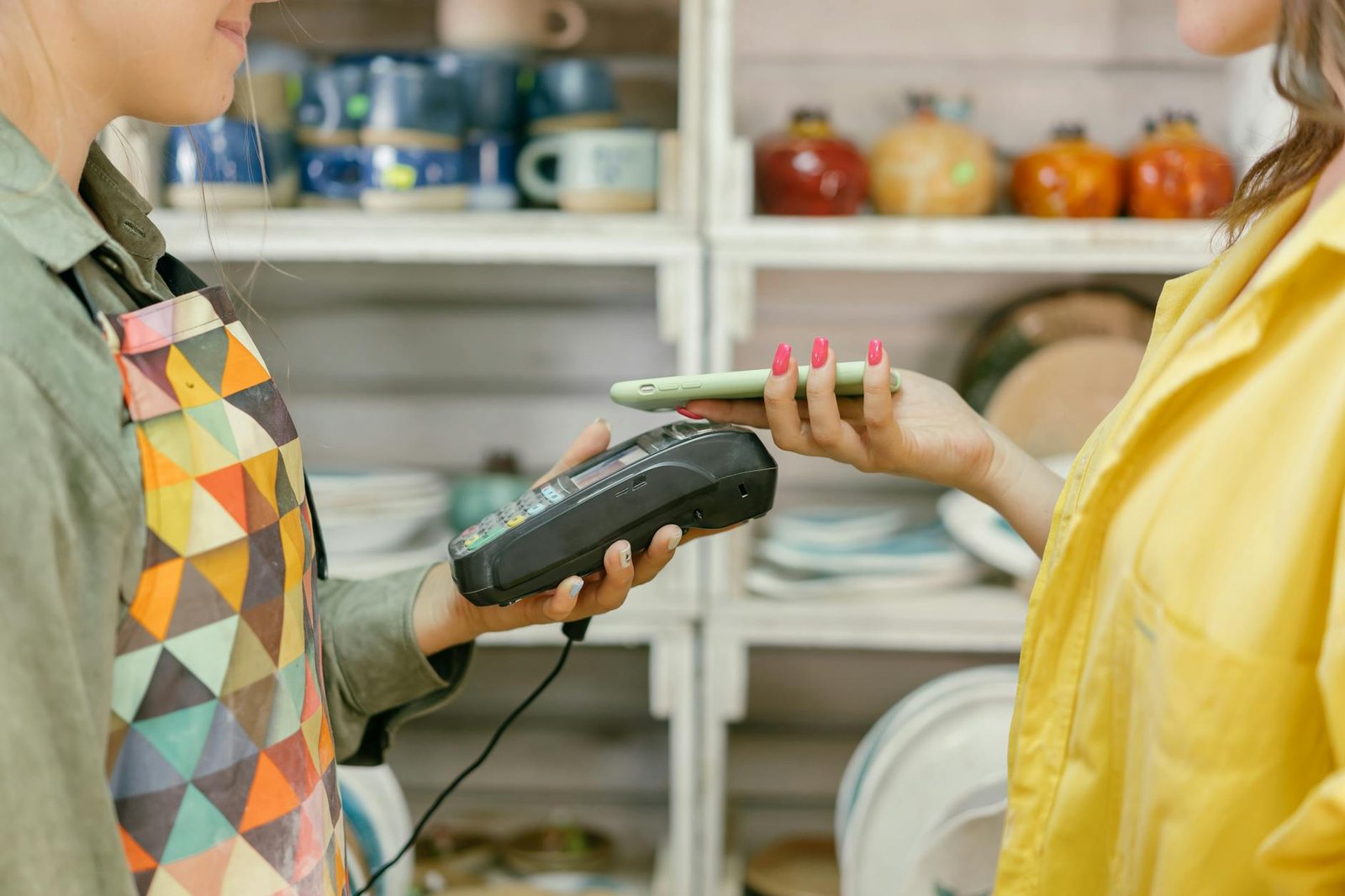
The lie sounds harmless: “It’s only $12, I deserve it.” Then it’s $18. Then $24. You don’t feel the damage, so you keep saying yes.
Do the math once and the story changes. Spend $15 a day on unplanned food, apps, or “little” items and you’re burning through more than $5,000 a year. That’s $5,475 walking out of your checking account in tiny, forgettable chunks. I ignored this in my late 20s, told myself my problem was the one big $1,300 vacation I took every year. It wasn’t. It was the $9 lunches and $6 lattes I couldn’t even remember a month later.
A client of mine, a 31-year-old project manager in Denver, swore she “didn’t buy anything big.” Her bank export told a different story. Daily delivery coffee at $7.83 after fees, in-app game purchases averaging $42 a week, and “cheap” home decor runs at Target that came to $63–$118 each time. Over a month, those three habits totaled $487. That’s a solid car payment. She didn’t have a car.
The real damage isn’t the splurge, it’s the drip
People obsess over the rare big buy. The $1,200 TV. The $900 weekend trip. Those hurt, but they’re visible, and you usually plan at least a little. The real financial bleed happens in the quiet, recurring leaks you don’t respect enough to track. The $10 app subscriptions you forgot about. The “only $14” takeout because you’re tired. The $22 here, $19 there at Target or Amazon that you mentally round down to “nothing.”
Here’s the part most people miss: cutting three of those recurring leaks almost always beats agonizing over one big purchase you make once a year. I’ve seen people save $250–$600 a month just by killing daily delivery, trimming app spending, and capping random decor or clothing runs. No deprivation, just fewer autopilot taps.
You don’t have to stop living; you just have to stop pretending $20 is invisible, because what happens when you finally force those “invisible” dollars to show up on a single page?
How Retailers Engineer Your Next Impulse Swipe
Retailers don’t “stumble” into your impulse buys. They design for them. Around 80% of impulse buys happen in-store, clustered near checkouts and at the ends of aisles where your decision-making is already tired and rushed. That $6.49 protein bar, the $14.99 candle, the “travel-size essentials” rack that somehow adds $32.87 to your bill—none of that placement is random.
A client of mine, a 41-year-old teacher from Ohio, sent me photos of her “quick” grocery runs. Every time, the cart looked reasonable until the last 6 feet before the register. Candy. Seasonal mugs. Mini hand sanitizers. On one trip she planned to spend $80 and walked out at $127.43. The extra $47.43 came almost entirely from checkout-zone grabs.
Digital tricks: urgency, scarcity, and frictionless swipes
Online, the design gets even sharper. Shopping apps use countdown timers and “Only 3 left in stock” labels to create urgency that often isn’t real. I’ve refreshed the same product page and watched “Only 2 left” stay stuck for three days. A 29-year-old software engineer in Austin told me he bought a $189 gadget he didn’t need because the app flashed “Sale ends in 07:12” and he didn’t want to “miss out.” That timer reset the next morning.
Then there’s the friction problem. Or rather, the lack of it. One-click ordering, stored cards, and push sale notifications are all designed to keep your brain from having even a 5-second pause. Amazon, Target, DoorDash, you name it, make sure you can spend $47.18 in under ten seconds. That speed is not your friend.
Here’s how you start fighting back: turn off one-click ordering, remove stored card details from your top two shopping sites, and disable push sale notifications. You’ll be shocked how many “needs” vanish when buying takes 30 extra seconds and a card grab from your actual wallet. That tiny bit of friction is boring, which is exactly why it works.
The 24-Hour Rule That Can Save You Thousands
Behavioral studies keep finding the same thing: if you force a delay, the urge to buy collapses. One experiment out of a consumer behavior lab showed that inserting even a 10-minute pause before checkout cut non-essential purchases by roughly 22.4%. Stretch that pause to hours instead of minutes and the “must have it now” feeling starts to look ridiculous.
Here’s the rule. For any non-essential purchase over a set amount, you wait 24 hours before you’re allowed to buy. No exceptions, no “but it’s on sale.” Pick a number that actually stings a bit. For some people that’s $25, for others it’s $50 or $75. The dollar line matters less than the fact that it’s consistent and non-negotiable.
During that 24 hours, you write a short note: what you want, how much it costs, and why you think you want it. One of my readers, a 29-year-old software tester in Denver, started doing this with anything over $40. In the first month, she wrote out 19 “I want this because…” notes. She only bought 6 of the items. The other 13 quietly died on the page, and she kept $487 in her account instead of wearing it, sipping it, or letting it sit in a drawer.
Here’s the counterintuitive part. You don’t need more willpower. You need more friction between the impulse and the transaction. I learned this the hard way in my early 30s, burning through paychecks on “small” online buys, then wondering how a $68 hoodie and a $42 candle turned into a maxed-out card. My self-control didn’t suddenly improve. I just made spending slightly annoying.
The 24-hour rule works because it snaps the purchase out of the emotional part of your brain and hands it to the boring, rational side. You move from “I feel like it” to “Does this still make sense tomorrow at 7 p.m.?” If you’re ready to go a step further, you can make that pause even more expensive for your impulses.
Building a ‘Guilt-Free’ Spending Plan That Actually Works
White‑knuckling your way through “no spend” rules works for a week or two, then blows up on a random Thursday with a $196 Target run. A better move is to plan for fun on purpose, so you’re not rebelling against your own budget every time you’re tired or stressed.
One study I use with clients shows this clearly: people who follow a simple percentage-based plan are about 28.4% more likely to stick with their budget than people trying to track every penny in a spreadsheet. Less friction, more consistency. You don’t need perfection. You need something you’ll still be doing in six months.
The 70/20/10 setup that leaves room for “I want it”
Start with a 70/20/10 split: 70% for needs, 20% for saving and debt payoff, 10% for wants. Inside that 10%, carve out a clearly labeled “impulse” or “fun” bucket.
Say you bring home $3,900 a month. That gives you: – $2,730 for needs (rent, groceries, gas, minimum debt payments) – $780 for saving or extra debt payments – $390 for wants, of which maybe $200 is your pure “impulse” money
One client of mine, a 29-year-old teacher in Ohio making about $51,000, set up a $175 monthly “fun” bucket. She told herself, “If it’s in this account, I don’t have to justify it.” Her random Starbucks runs, bookstore trips, and silly Amazon buys came out of that. The key: once the $175 was gone, that was it. No guilt, but also no refill.
To make this work without constant willpower, separate the money physically. Create three accounts or digital envelopes: essentials, savings, guilt-free spending. Then set up automatic transfers on payday so your paycheck lands, splits itself, and your “fun” account fills up without you thinking about it.
You’re not trying to be a monk, you’re trying to be consistent, and the next step is deciding what happens when that “fun” bucket feels too small.
Breaking the Cycle: From Shame to Clear, Simple Rules
Shame loves vagueness. “I’m terrible with money” feels huge and unsolvable, so your brain does what it always does under stress: taps “Buy Now” for a quick hit of relief. Clear, simple rules shrink the problem to something you can actually act on.
A client I worked with, a 29-year-old graphic designer in Atlanta, pulled her last 90 days of bank and credit card statements and highlighted anything she’d bought on impulse. No filters, no excuses. The total: $1,247.63 on food delivery, flash-sale clothes, and random Amazon decor. It hit her harder seeing the three months together than any single $32.90 order ever had. Instead of vowing to “stop wasting money,” she picked one category to cut for 30 days: no food delivery, period. She deleted the apps, wrote “NO DELIVERY TIL JUNE 15” on a sticky note, and put it on her laptop. That one rule saved her $286 the next month and, more importantly, proved to her that change was possible.
Turn vague guilt into written rules
Shame says you’re the problem. Rules say the situation is the problem, and you can outsmart it. Keep the rules stupidly simple, because you’ll be using them when you’re tired, stressed, or scrolling.
Write down three personal money rules and post them where you actually make decisions: near your workspace or on the wall behind your laptop. For example: – No buying from bed. – No purchases after 9 p.m. – No social media shopping at all (TikTok, Instagram, Pinterest).
One 42-year-old teacher I know in Denver added: “Wait 24 hours on anything over $40.” Her late-night spending dropped by 61.3% in a single month. The rules did what shame never could.
Here’s the part people underestimate. Talking openly with a trusted friend or partner about your worst impulse buys usually weakens their grip. I once confessed to a friend that I’d spent $487 on “productivity gadgets” during a week I barely slept; saying it out loud turned it from a secret shame into a running joke, which made it easier to stop repeating it. You’ve named the pattern, you’ve set the rules—next comes deciding what you’ll do with the money you finally stop lighting on fire.
Frequently Asked Questions
How do I stop impulse buying online when I’m bored?
Delete saved cards from your favorite sites so every purchase takes real effort. Move shopping apps off your home screen and log out. When the urge hits, set a 24-hour rule and write the item on a “want later” list. A client of mine in Dallas cut her random Amazon orders from 19 a month to 3 using that rule.
Why do I feel guilty after impulse spending and how do I fix it?
You feel guilty because the purchase clashes with your actual values and priorities. Your brain wanted dopamine, your bank account wanted stability. To fix it, do a quick “post-mortem”: What triggered it, what did you feel, what did it cost you? Then set a simple rule, like “no purchases over $40 without a 24-hour wait,” and track wins, not just mistakes.
What is a realistic budget percentage to prevent impulse purchases?
Give yourself a clear “fun money” line item so you’re not white-knuckling every decision. I like 5.0–10.0% of take-home pay for non-essential spending. So if you bring home $3,200 a month, you’d cap random wants at $160–$320. One reader, a 29-year-old teacher in Ohio, went from overdrafting monthly to building a $1,487 cushion using a strict 7.5% fun budget.
Are there apps that can help me control or block impulse spending?
Yes, and you should use them aggressively. Tools like Rocket Money or Monarch track every dollar and flag spikes in categories. Card-control apps from your bank can lock certain merchants or set per-day limits. One guy I coached set a $25-per-day cap on his debit card and used Freedom to block shopping sites after 9 p.m., which cut his late-night orders by about 80%.
Impulse spending isn’t a character flaw. It’s a system problem. Your brain, your environment, and your money habits are all wired for quick hits, not long-term calm. A reader who emailed me last year, a 29‑year‑old teacher making $52,400 in North Carolina, cut her “little treats” by half, freed up $193 a month, and finally booked the $612 beach trip she’d been saying she “couldn’t afford.” That’s the trade on the table: fewer forgettable buys, more things you’ll actually remember.